


Dec
Environment, Uncategorized
How can the deforestation of the rainforest be stopped?
The balance of the internationally agreed goals to slow down global warming is sobering: the goal formulated at the Paris climate conference in 2015 to limit global warming to 1,5°C if possible, but at least below 2°C, can hardly be achieved. Because the results of this year's UN climate conference in Sharm El-Sheikh, Egypt, are anything but sufficient - most experts and politicians agree on that.
And when it comes to forest protection, too, there has been more regression than progress. While at last year's COP26 in Glasgow, Scotland, more than 140 nations with over 90% of the world's forest areas agreed in a joint forest and land use declaration, forest protection was only a side issue this year. There are no concrete cost calculations or binding measures.
A billion for the forest is not enough
The federal government wants to provide one billion euros more for forest protection measures by 2025. However, if you compare the initially large sum with the calculations of a recently published Evaluation to the progress of forest protection, this can only be a start. It is assumed that up to 460 billion US dollars per year would be needed to stop global forest loss and restore the forest areas that have already been destroyed.
But why is the rainforest being cleared on a large scale? Besides international agreements, what can be done to stop deforestation? Or is it already too late to intervene?
Soy and cows are the main drivers of deforestation
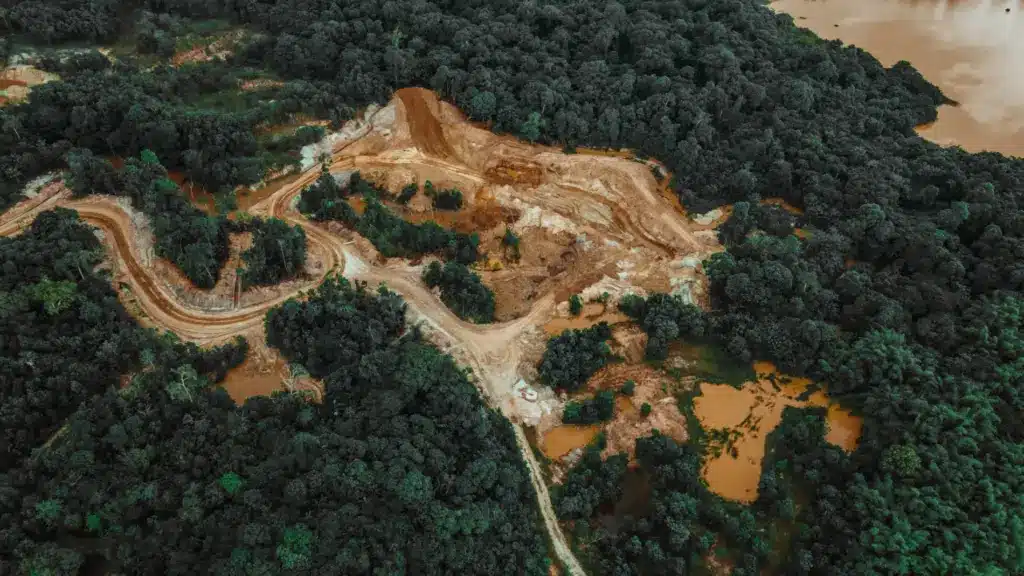
More than 1990 million hectares have been lost since 420. Perhaps surprising for some: not the timber industry, but agriculture is the main driver of deforestation. The conversion of forest to agricultural land is the decisive reason for the vast majority of deforestation. Cultivation of soya, maize and animal husbandry displace the rainforest.
Using the forest sustainably without endangering its existence means protecting it. Only when the forest itself has a value as a forest that continues to exist does it not have to give way to agricultural land. That is exactly the claim of Betterwood: Protect through sustainable use. The purchase of durable tropical wood from proven sustainable forest systems supports local forest protection in South America. Companies and consumers in cooperation with certification associations such as the FSC can already make a decisive difference in the development of global warming - even if international, politically agreed targets are not met.
Amazon on the brink?
It's not too late yet: the Amazon has not yet reached the tipping point. Although countries such as Indonesia, Venezuela and Malaysia have high rates of deforestation, they also recognize the global importance of forests. The change of government in Brazil can also give cause for optimism with regard to forest protection. Brazil, Indonesia and the Democratic Republic of the Congo have now joined forces against illegal forest destruction. A hopeful sign, because it is the three most important rainforest countries in the world that want to take action against corruption and are committed to the development of sustainable forest systems. Consumers who pay attention to a sustainably certified origin have a direct influence on the protection of forest stands.