


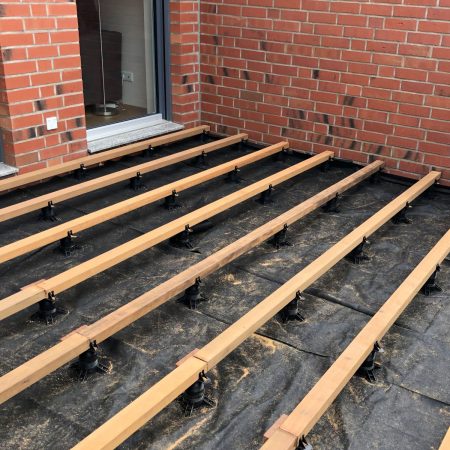
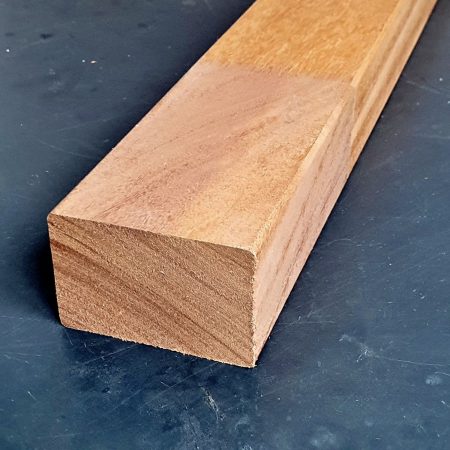
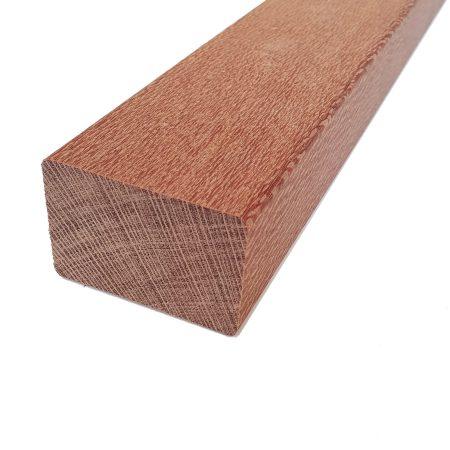
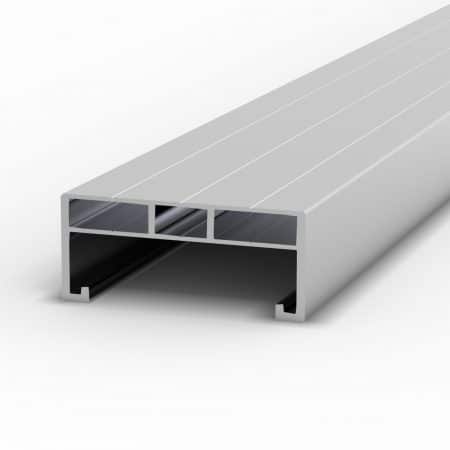
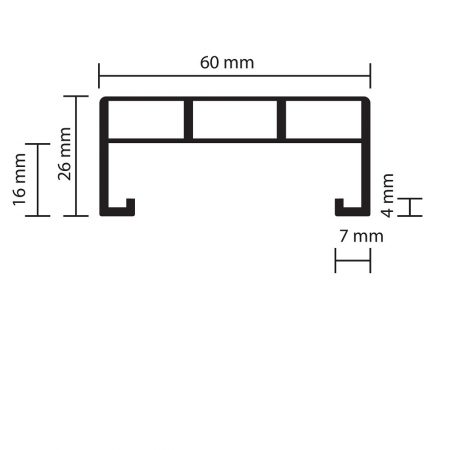
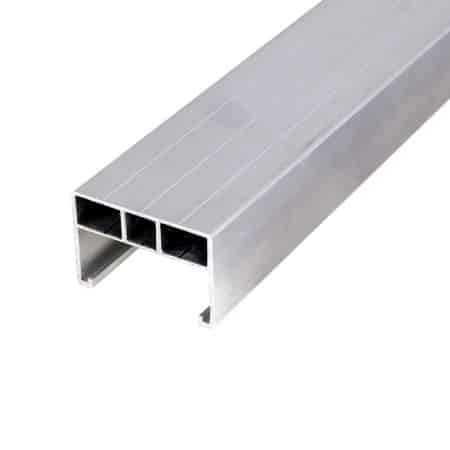
Accessories for the substructure
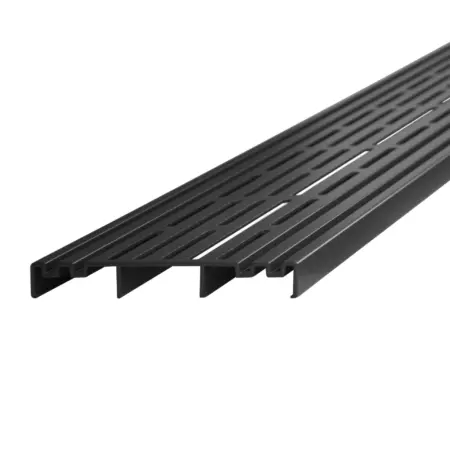
ab 8,08 €


ab 10,73 €
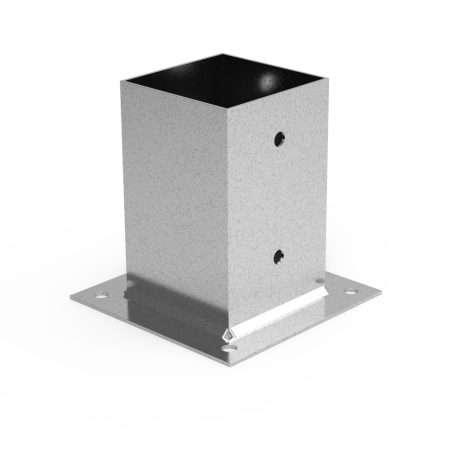
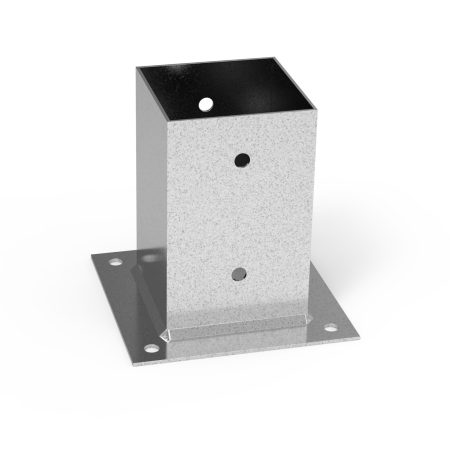
ab 11,13 €
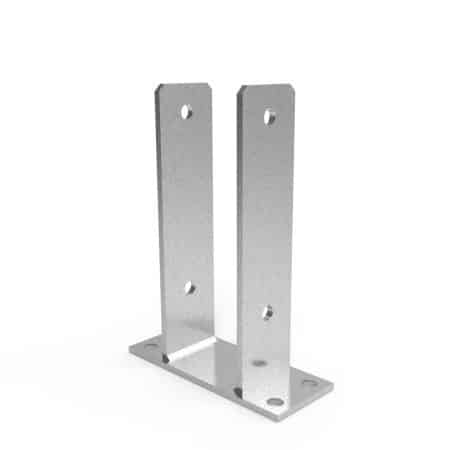
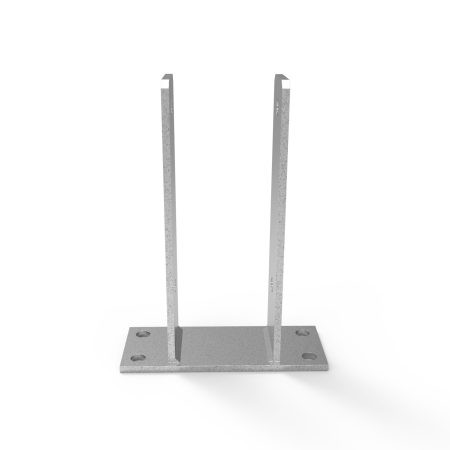
ab 15,20 €
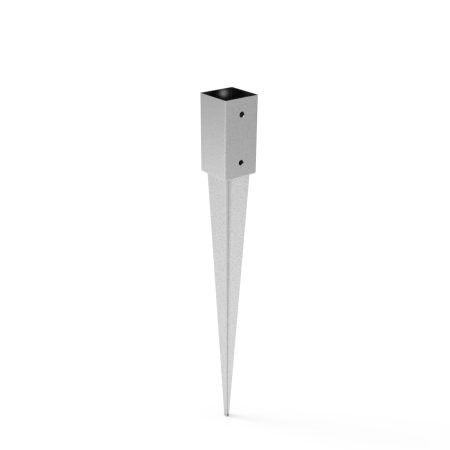
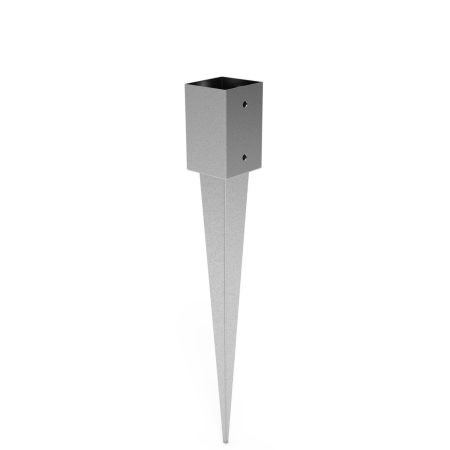
ab 8,08 €
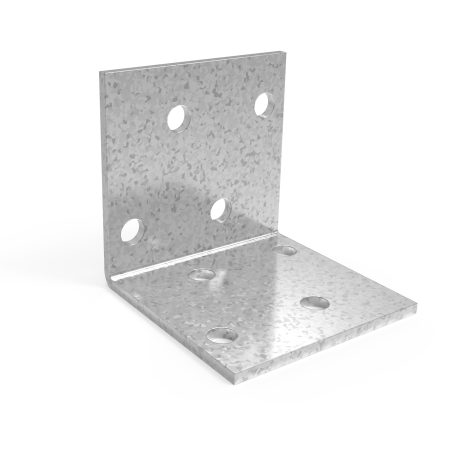
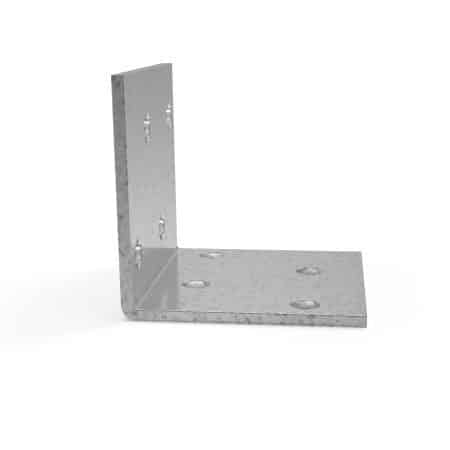
16,21 €
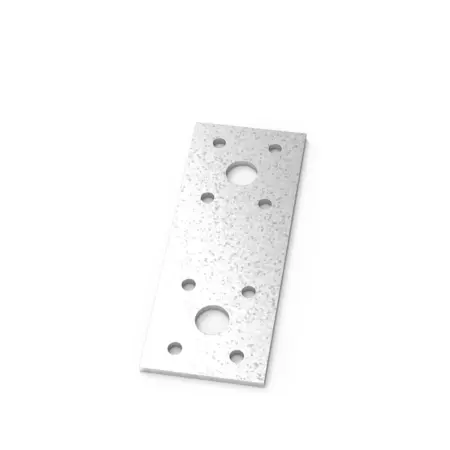
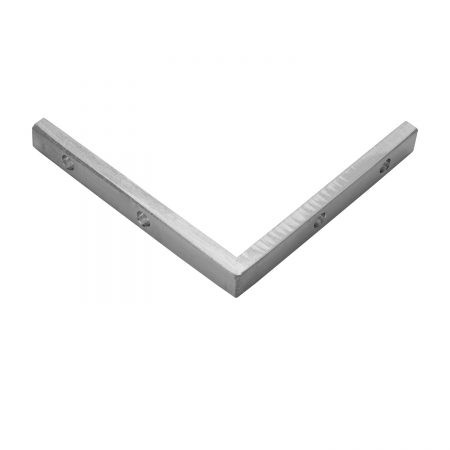
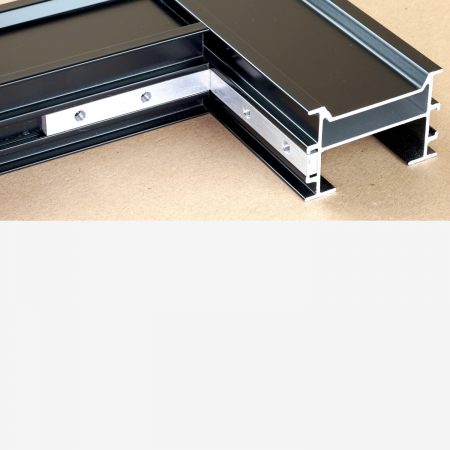
ab 68,63 €
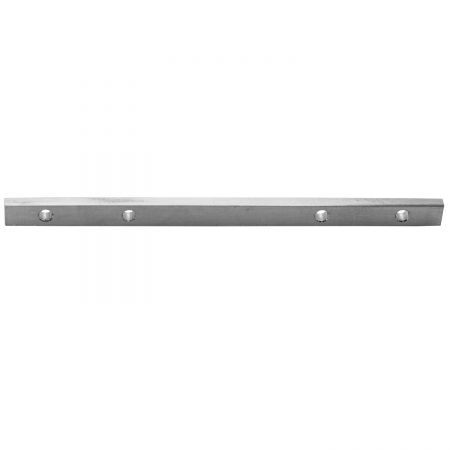
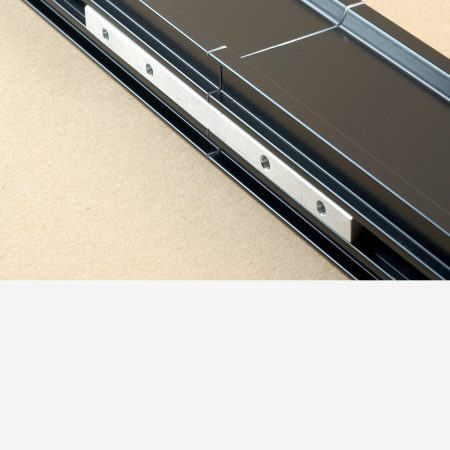
ab 68,63 €
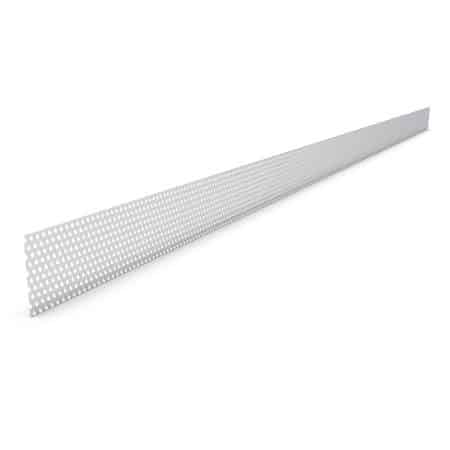
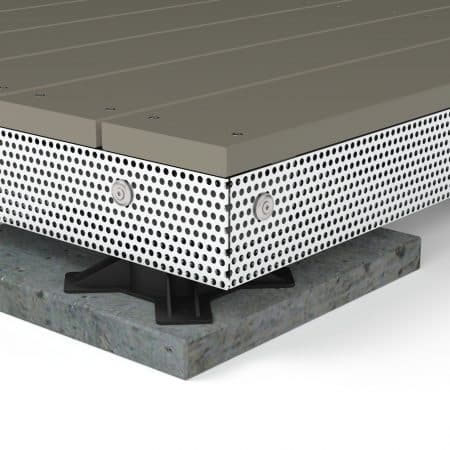
ab 10,12 €
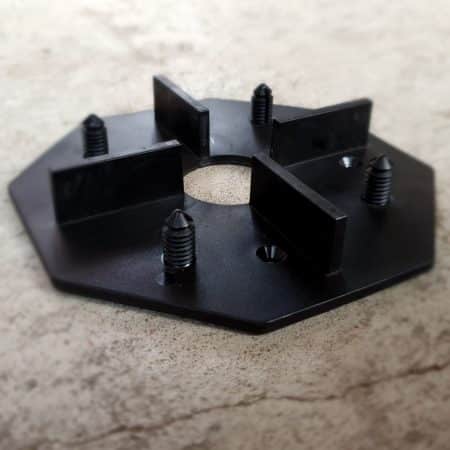
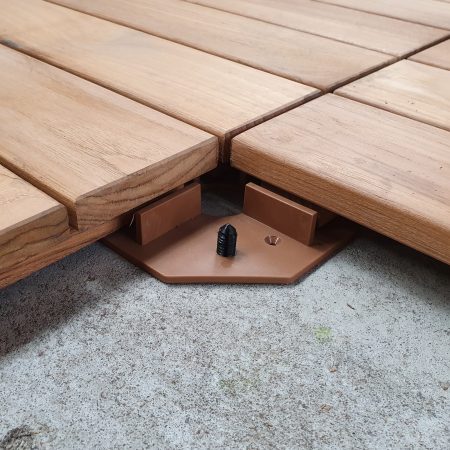
3,00 €
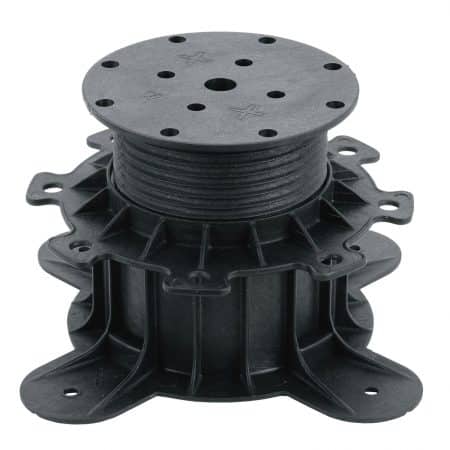
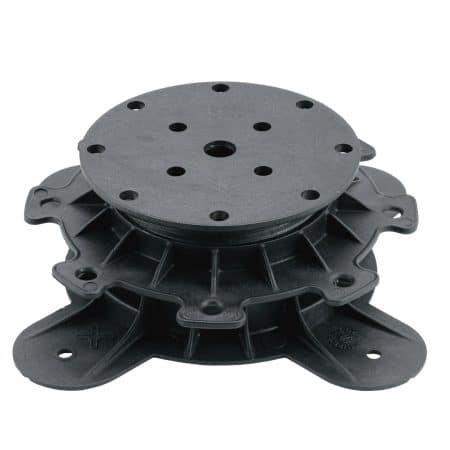
ab 0,97 €
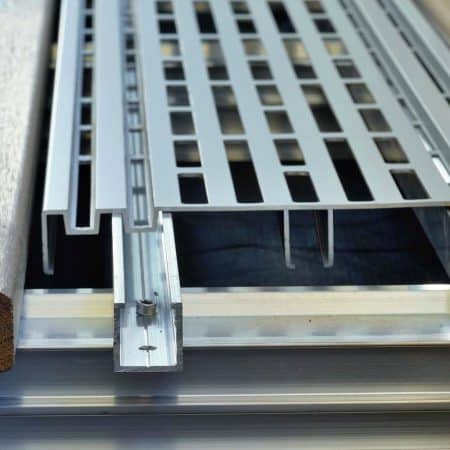
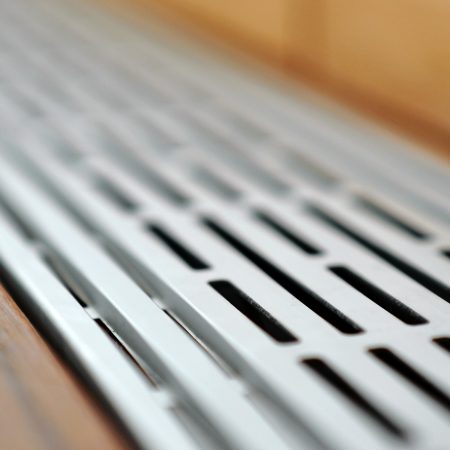
ab 7,67 €
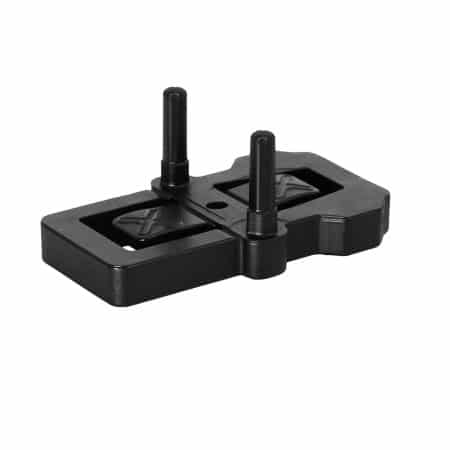
ab 24,36 €
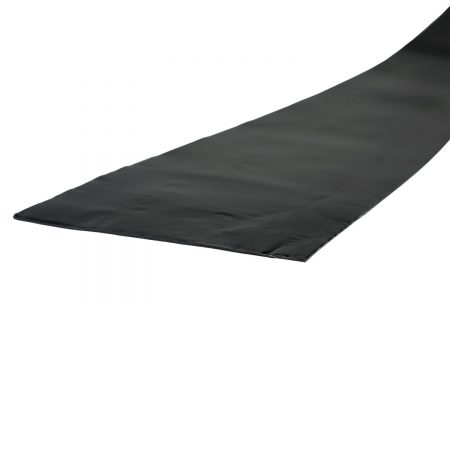
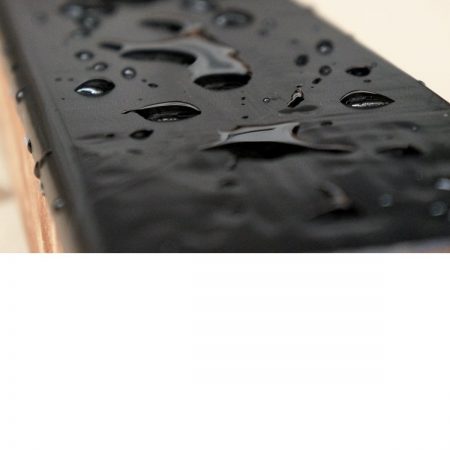
25,37 €
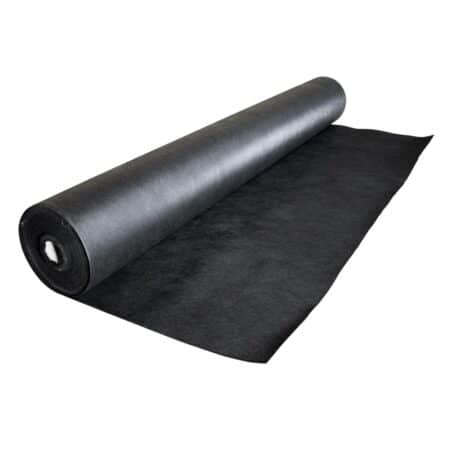
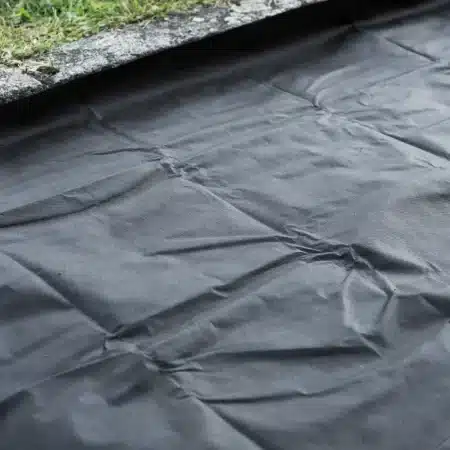
ab 20,28 €
Plan a wooden terrace now for free.
We will provide you with a laying plan and an offer with all the accessories and transport costs. We can also plan extras such as construction height or patio steps for you.
terrace plannerWhich substructure is the right one?
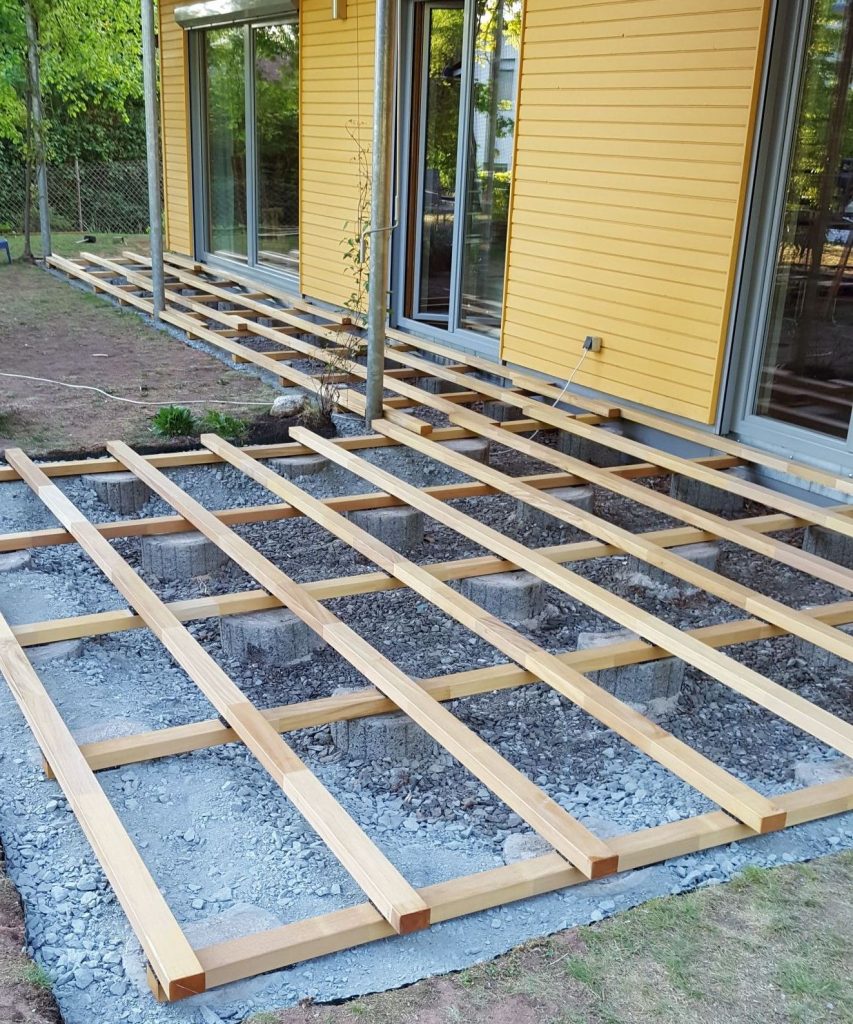
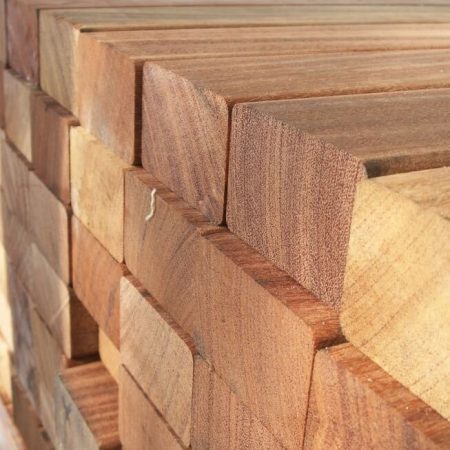
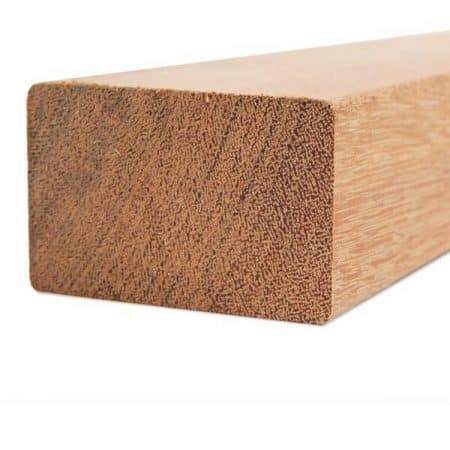
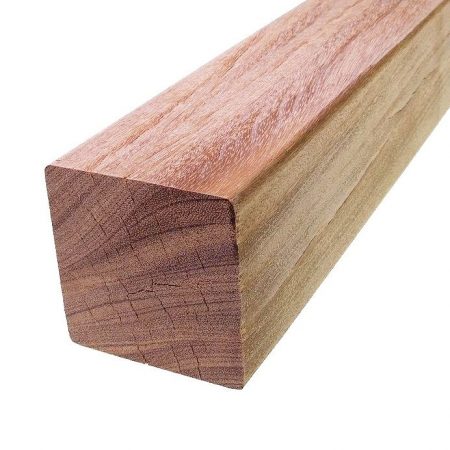
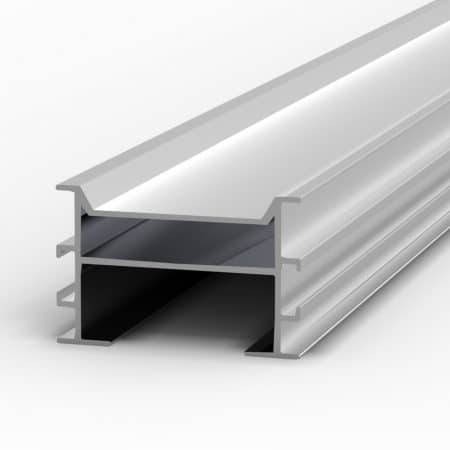
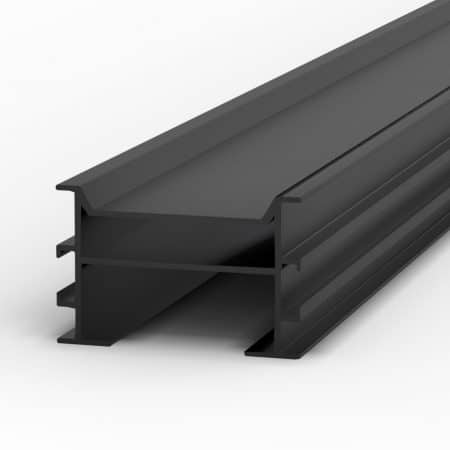
Wood or aluminum for the substructure?
There is no general answer to this question. Depending on the project and your priorities, either one or the other material is better suited as a substructure for your wooden deck. In our Consulting you will find a detailed evaluation of the advantages and disadvantages of wood and aluminum in terrace construction.
material comparison| Material: | BioMaderas hardwood | Aluminium |
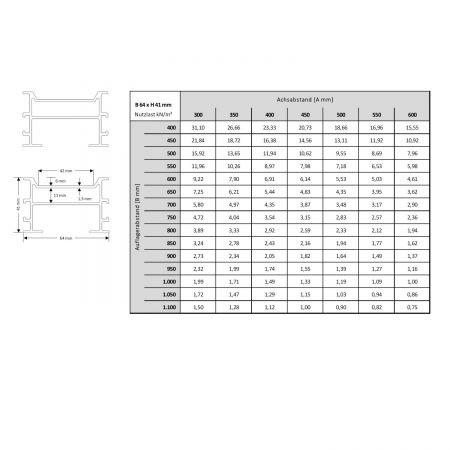
| Span: | up to 200cm | up to 110cm |
| Shelf life: | at least 25 years | practically indestructible |
| max. delay: | 1,0% | 0,1% |
| Sustainability: | very good (FSC® 100%) | rather bad |
Know where it comes from
We are proud that our wood comes exclusively from sustainable forestry. That's why we're happy to show you where the tree grew and what we're doing for the rainforest.
Our commitment to the environmentOur decking boards
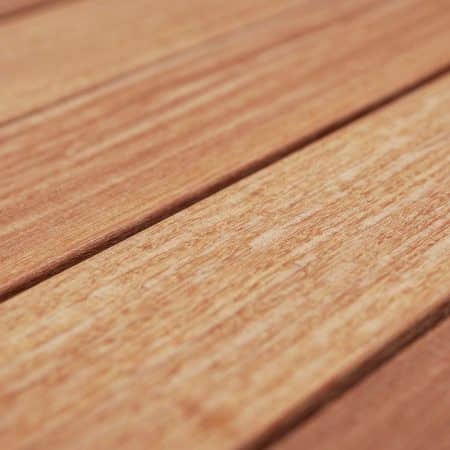
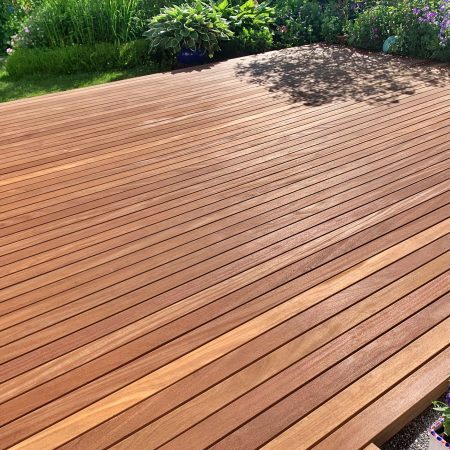
ab 6,21 €
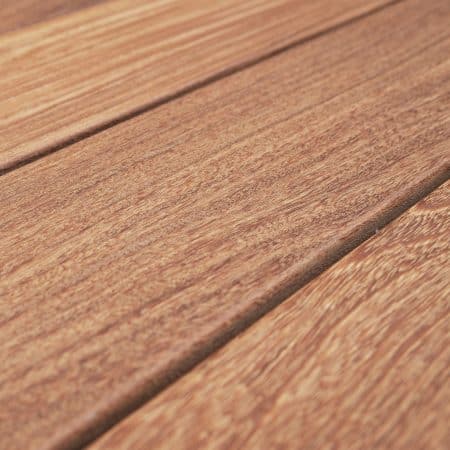
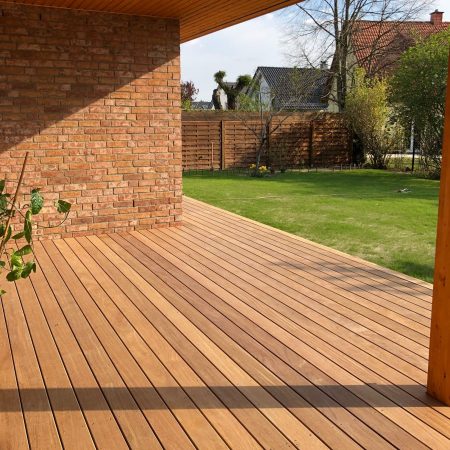
Cumaru decking, FSC 100%
Price from: €70 per m2, resistance class: 1
Advantages: ✓ best durability ✓ particularly robust and scratch-resistant
Disadvantages: ✗ partly rough surface ✗ high power development
Tip: Sand the floorboards after they have been exposed to the weather for the first time.
ab 8,89 €
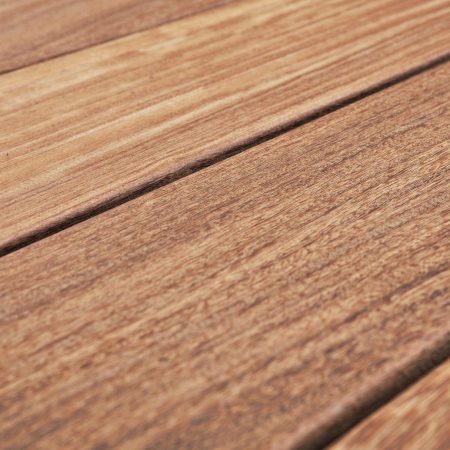
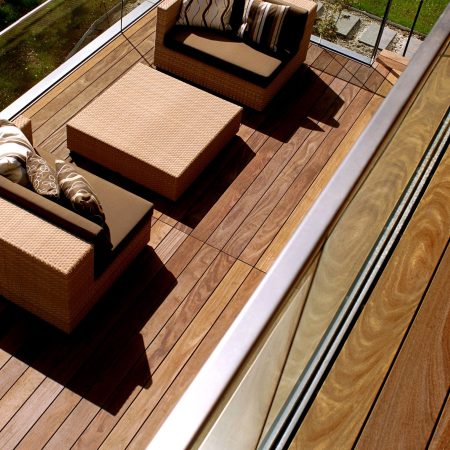
Cumaru decking, FSC 100%
Price from: €70 per m2, resistance class: 1
Advantages: ✓ best durability ✓ particularly robust and scratch-resistant
Disadvantages: ✗ partly rough surface ✗ high power development
Tip: Sand the floorboards after they have been exposed to the weather for the first time.
ab 11,69 €
Cumaru decking, FSC 100%
Price from: €70 per m2, resistance class: 1
Advantages: ✓ best durability ✓ particularly robust and scratch-resistant
Disadvantages: ✗ partly rough surface ✗ high power development
Tip: Sand the floorboards after they have been exposed to the weather for the first time.
ab 9,26 €
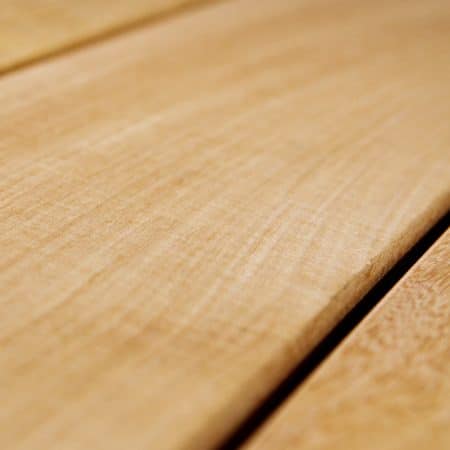
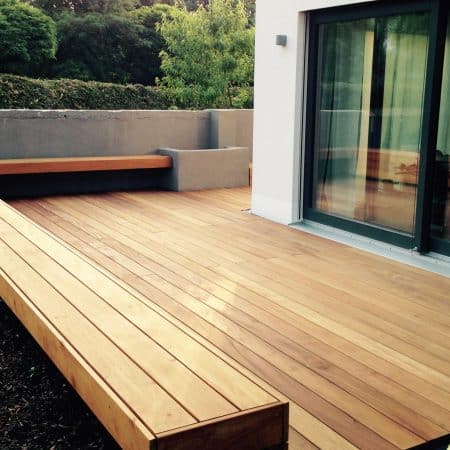
Garapa decking boards, FSC 100%
Price from: €65 per m2, resistance class: 1-2
Advantages: ✓ smooth surface ✓ homogeneous, light color
Disadvantages: ✗ Substances containing iron lead to discoloration ✗ Unscrewed tends to warp
Tip: Patio cleaning removes discoloration and
Professional interim storage avoids delay.
ab 9,97 €
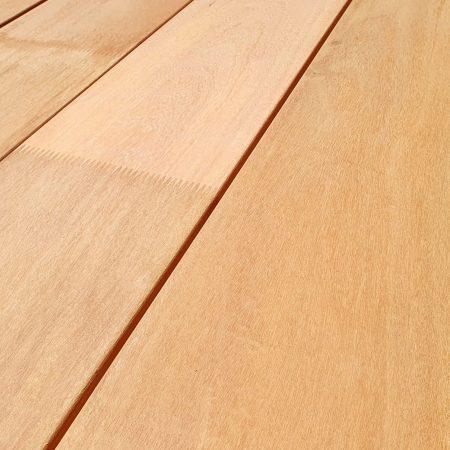
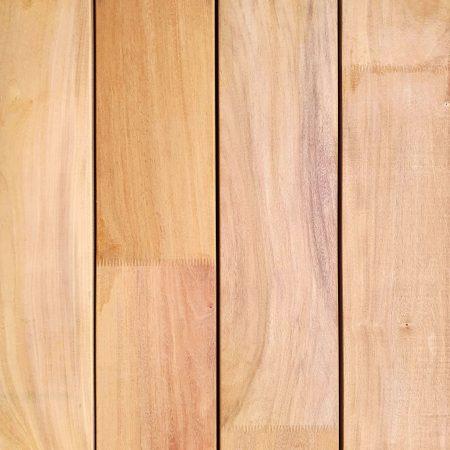
Garapa decking boards, FSC 100%
Price from: €65 per m2, resistance class: 1-2
Advantages: ✓ smooth surface ✓ homogeneous, light color
Disadvantages: ✗ Substances containing iron lead to discoloration ✗ Unscrewed tends to warp
Tip: Patio cleaning removes discoloration and
Professional interim storage avoids delay.