
acacia
[Acacia]; coll. for black locust [Robinia pseudoacacia]; Trade names false acacia, Robinia false acacia (GB)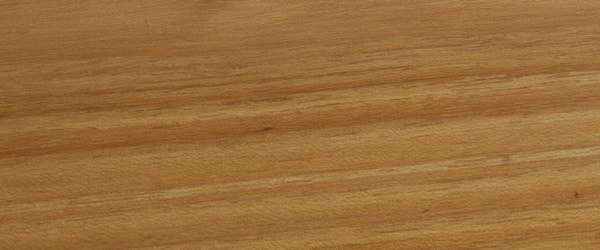
|
Origin |
USA, Southeast Europe |
|
bulk density |
0,69 - 0,79 g/cc |
|
durability class |
1-2 |
|
radial shrinkage |
4,4% |
|
Tangential shrinkage |
6,9% |
|
wood color |
yellowish olive to brown |
|
wood structure |
strikingly structured |
|
Usage |
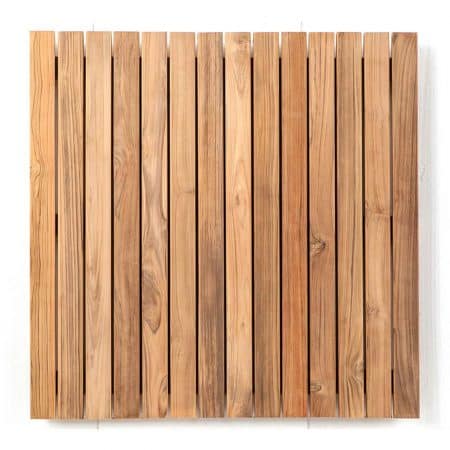
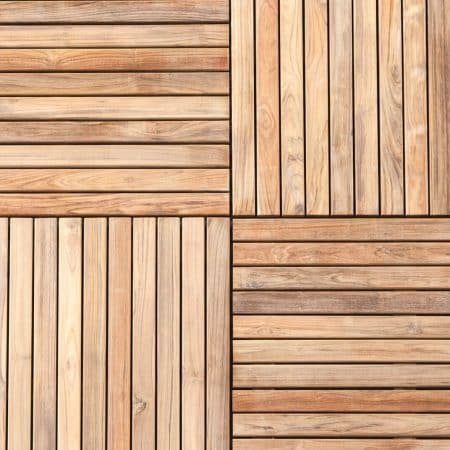
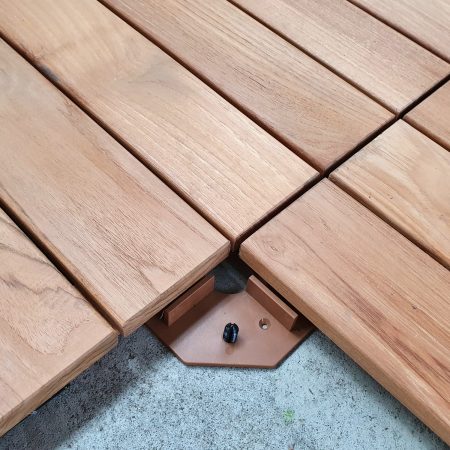
Wood tiles, countertops, decking wood |
In the German trade, acacia is the wood for mass-produced goods in the garden wood segment, as it is very cheap and relatively durable. Especially as Wooden tiles and countertops the wood is offered. As a rule, this is not the real acacia wood from Africa, but robinia, which originally grows in North America, but is now also planted in Southeast Europe.
Robinia – The false acacia
Whoever buys acacia in Germany usually buys robinia. The fact that the botanically incorrect name "acacia" has prevailed in Germany is due to the visual similarity of the trees. From a botanical point of view, both species have hardly anything in common and do not even share the same genus family. Since the real acacia wood from Africa can hardly be found on the European market, this article deals with the fake acacia, which should correctly be called Robine.
Acacia – advantages and disadvantages
The flat acacia is one of the few tree species that also grow in Europe and still achieve good durability outdoors. Since the tree, which originated in the USA, is very frugal with its location, it has spread very widely in Europe and is increasingly displacing the native wood species.
A weakness of the false acacia is its high risk of warping, cracking and splintering. Drying must proceed very slowly so that the wood does not warp. Nevertheless, increased warping can occur outdoors with acacia wood tiles and also with worktops indoors.
Sources: Wikipedia, wood from the tray, Tropix Cirad 7
ab 220,00 € m²
ab 230,00 € m²
ab 230,00 € m²
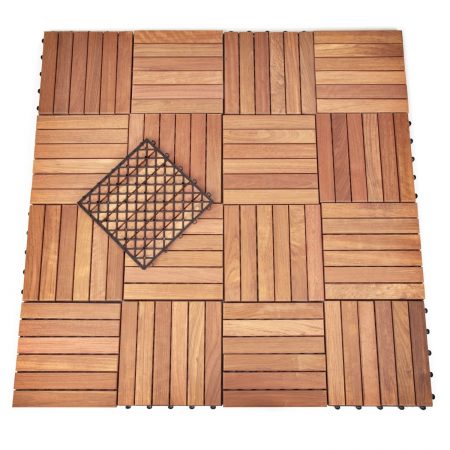
6,50 €
Cumaru wood tiles, FSC 100%
Price: €72 per m2, resistance class: 1
Advantages: ✓ best durability ✓ particularly robust and scratch-resistant
Disadvantages: ✗ partly rough surface
Tip:Sand tiles after initial exposure to weather.
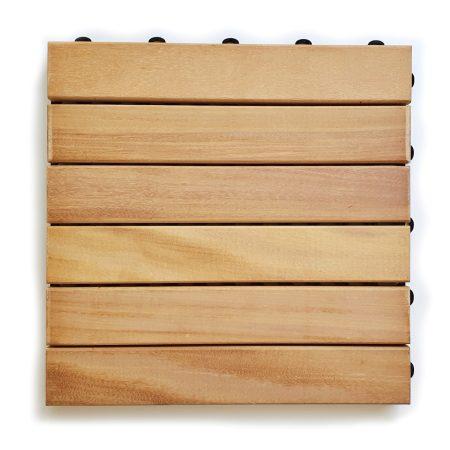
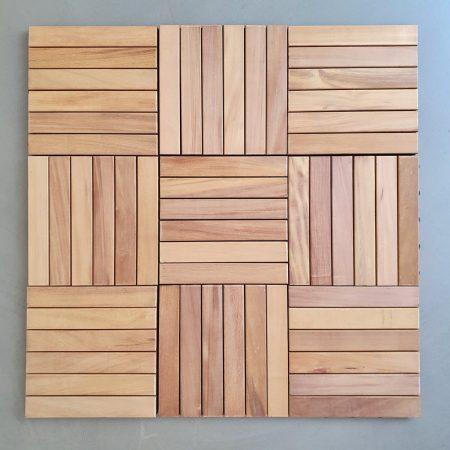
6,50 €
Garapa wood tiles, FSC 100%
Price: €72 per m2, resistance class: 1-2
Advantages: ✓ smooth surface ✓ homogeneous, light color
Disadvantages: ✗ Ferrous substances lead to discolouration
Tip: Patio cleaning removes discoloration
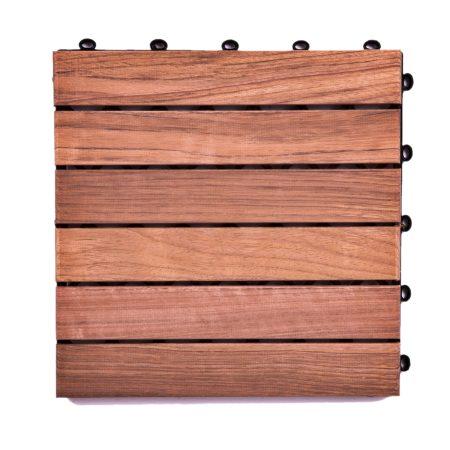
6,50 €
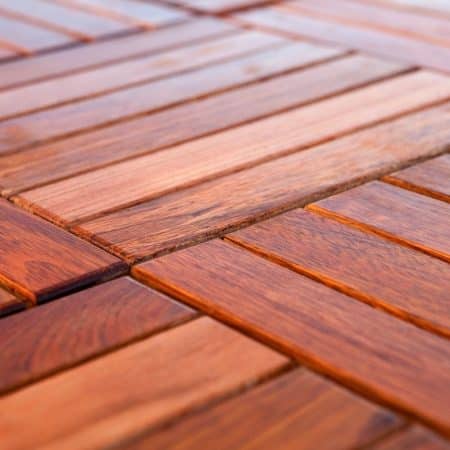
Jatoba wood tiles, FSC 100%
Price from: €72 per m2, resistance class: 1-2
Advantages: ✓ smooth surface ✓ strong color and grain
Disadvantages:✗ unoiled tendency to crack ✗ colored ingredients wash out
Tip:Clean and oil tiles after installation.
7,50 €
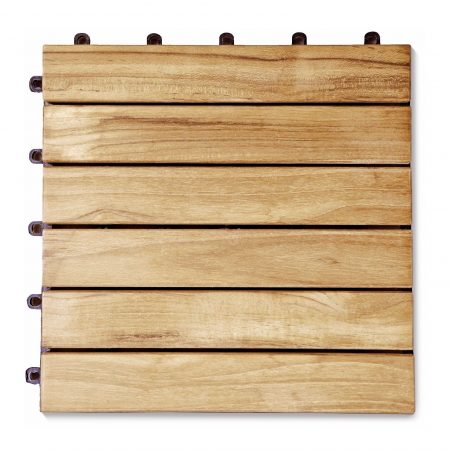
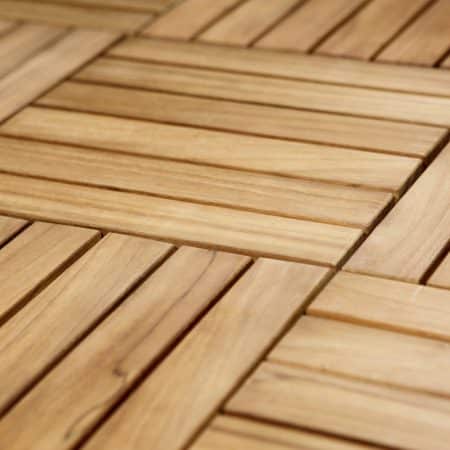
Teak wood tiles, FSC 100%
Price: €83 per m2, resistance class: 1
Advantages:✓ Best durability and dimensional stability ✓ Lowest risk of cracks and splinters
Disadvantages: ✗ slightly more expensive
Tip: Terrace oil is not necessary if silvering is desired.