Kirschbaum
[cherry tree]; [Prunus avium]; Trade names: Cherry(EN), merisier (FR); ciliegio (IT); cerzo (ES)
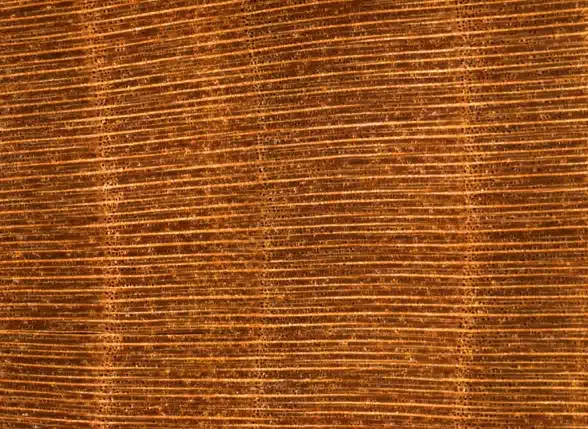
| Origin | Europe, North America, Middle East |
| bulk density | 0,52-0,60-0,70 g/cm³ |
| durability class | 3 – 4 |
| Compressive strength | 44-55 N/mm² |
| flexural strength | 83-110 N/mm² |
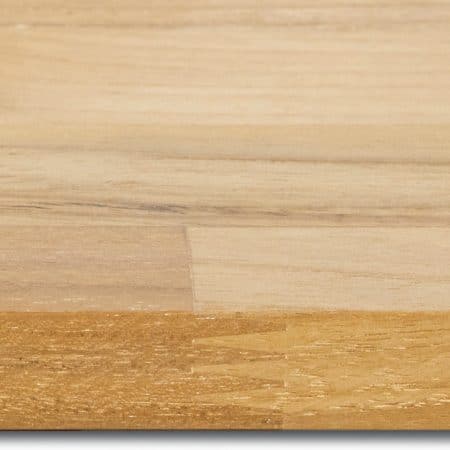
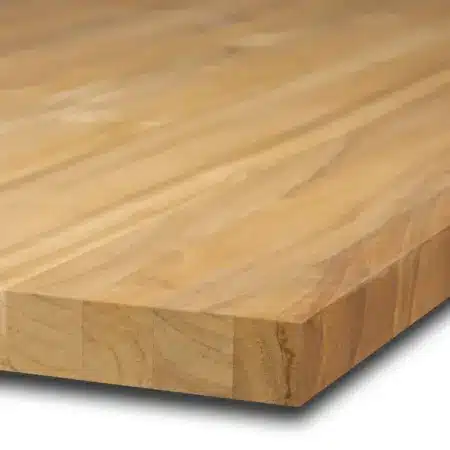
| wood color | red brown |
| wood structure | evenly fine |
| Differential shrinkage (radial) | 0,16-0,18% |
| Differential shrinkage (tangential) | 0,26-0,33% |
| PH value | ≈ 4,5 |
| Usage | High-quality interior design, as veneer or solid for furniture, parquet, ceiling and wall coverings, as well as jewelry items |
Cherry tree wood, from the species Prunus avium (European cherry tree) and Prunus serotina (American cherry tree or black cherry), is one of the most sought-after types of wood in the timber industry. With a height of up to 25 meters, the European cherry tree presents itself as a classic furnishing wood with a fine structure and an attractive, mahogany-like red-brown color. The wood of the American cherry tree is particularly in demand due to its larger trunk dimensions and dominates the market. Both types of wood are used as veneer wood in interior design and are particularly popular for high-quality furniture and interior fittings. European demand cannot be fully met due to limited trunk dimensions. In addition to Prunus avium and Prunus serotina, wood species such as Prunus padus and Prunus serotina are also available in the trade as American cherry or black cherry. Cherry wood as firewood is less economically relevant.
The cherry wood also impresses with its unique color palette. The sapwood is whitish to yellowish gray, while the heartwood is initially yellowish or light reddish brown and darkens to a golden reddish brown under the influence of light. The American cherry is even darker in color. Fine pores and characteristic growth zones characterize the structure, complemented by small mirrors of wood rays. The overall wood characteristic is a reddish-brown tone with a harmoniously fine structure. It is easy to work with and the wood is suitable for furniture, parquet, ceiling and wall coverings and jewelry. It dries well, but is prone to brain cracking. The natural durability varies between moderate and not very durable. Cherry wood is very popular in high-quality interior design, especially as veneer and solid wood, both historically in Biedermeier and Art Nouveau furniture construction as well as in contemporary applications.
Sources: Wikipedia, Wood from the specialist (GD Wood)
ab 24,20 €
ab 15,00 €
ab 22,80 €

ab 15,00 €
ab 38,00 €