
durability classes
Also referred to as resistance or durability, is usually according to the standard DIN EN 350-2 determined. Here the resistance to insects, fungi and harmful substances, which increase the rotting of the wood, is tested. The classification is from class 1 (very durable) to class 5 (not durable). Class 1 wood (e.g. cumaru or teak) has a life expectancy of more than 25 years under moderate climatic conditions. Class 3 wood (such as Bangkirai) has a life expectancy of up to 15 years. Class 5 wood (e.g. beech) has a life expectancy of less than five years (see: wood species comparison).
DURABILITY CLASSES WOOD
Here you will find an overview of what the resistance class says about the lifespan of wood outdoors:
|
Class |
Lifespan |
Types of wood |
|
1 = very persistent |
at least 25 years |
Teak, cumaru |
|
1-2 = very persistent |
at least 20 years |
Jatoba, Garapa |
|
2 = permanent |
15 to 25 years |
Bongossi, Bangkirai |
|
3 = moderately durable |
10 to 15 years |
Siberian larch, Douglas fir |
|
4 = not very durable |
5 to 10 years |
Spruce |
|
5 = not permanent |
less than 5 years |
Maple, birch, beech |
6,50 €
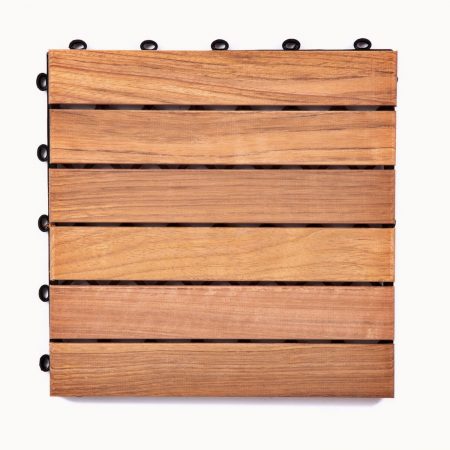
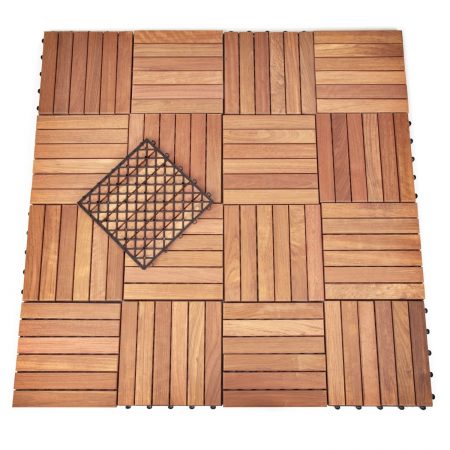
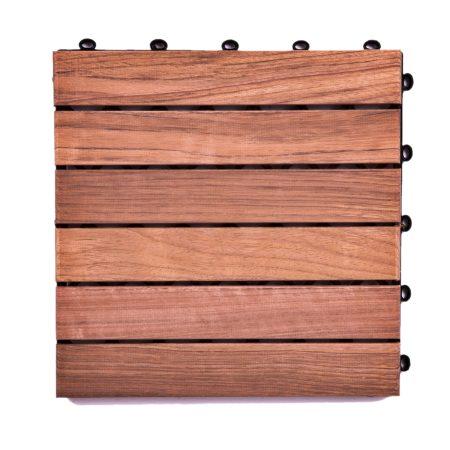
Cumaru wood tiles, FSC 100%
Price: €72 per m2, resistance class: 1
Advantages: ✓ best durability ✓ particularly robust and scratch-resistant
Disadvantages: ✗ partly rough surface
Tip:Sand tiles after initial exposure to weather.
ab 6,50 €
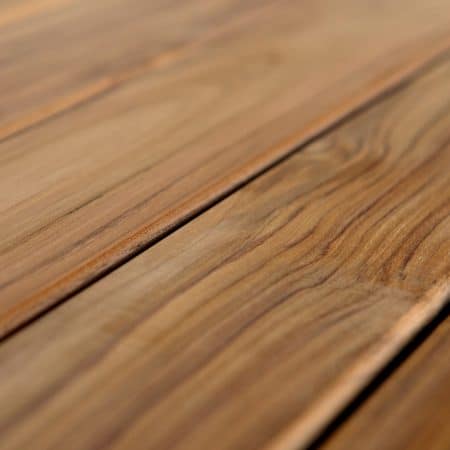
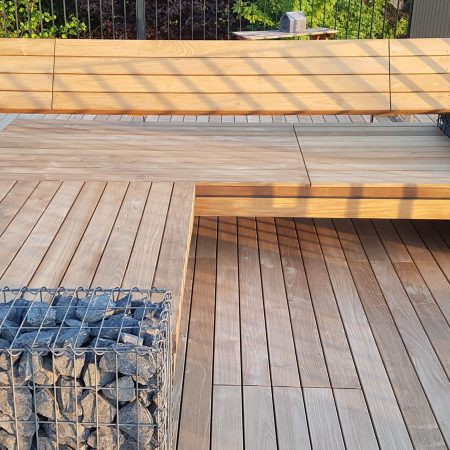
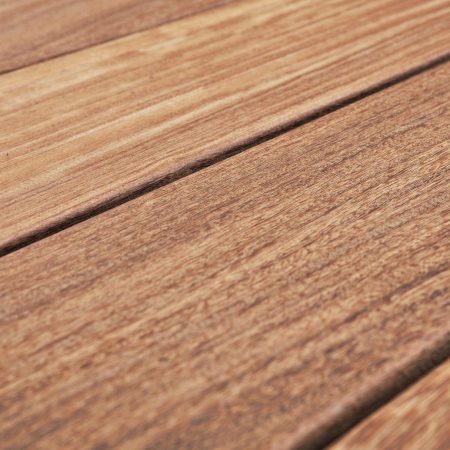
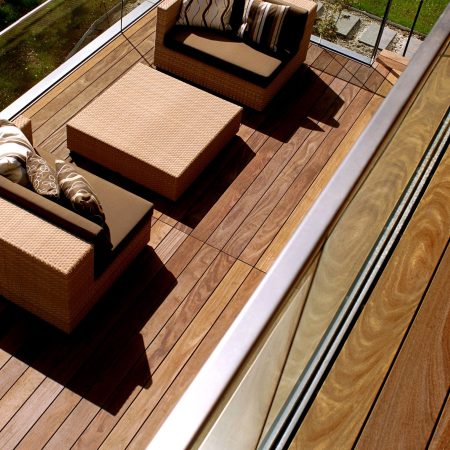
Teak decking, FSC 100%
Price from: €130 per m2, resistance class: 1
Advantages: ✓ Best durability and dimensional stability ✓ Lowest risk of cracks and splinters
Disadvantages: ✗ relatively expensive ✗ not very long boards
Tip: Lay decking boards together.
ab 11,50 €
Cumaru decking, FSC 100%
Price from: €70 per m2, resistance class: 1
Advantages: ✓ best durability ✓ particularly robust and scratch-resistant
Disadvantages: ✗ partly rough surface ✗ high power development
Tip: Sand the floorboards after they have been exposed to the weather for the first time.
6,50 €
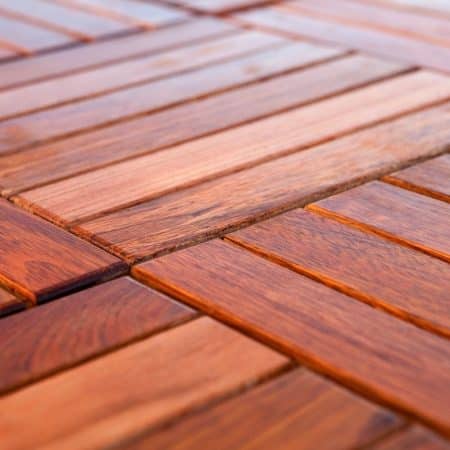
Jatoba wood tiles, FSC 100%
Price from: €72 per m2, resistance class: 1-2
Advantages: ✓ smooth surface ✓ strong color and grain
Disadvantages:✗ unoiled tendency to crack ✗ colored ingredients wash out
Tip:Clean and oil tiles after installation.