
elm
[Elm]; [Ulmus spp., family Ulmaceae]; Trade name: Elm, elm (EN)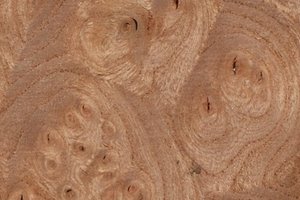
|
Origin |
North America, Europe, Asia |
|
bulk density |
440-800kg/m³ |
|
durability class |
4 |
|
radial shrinkage |
0,17 - 0,2% |
|
Tangential shrinkage |
0,27 - 0,29% |
|
wood color |
light brown, through grey-brown to red-brown and darkening under the influence of light |
|
wood structure |
Early wood: coarse and ring-pored; Latewood: pores fine and united to mostly wavy bands |
|
Usage |
Veneers, furniture, stairs, parquet, household items |
The genus Ulmus includes 41 species, predominantly in the Northern Hemisphere, mainly in East Asia (27 species), North America (9 species) and Europe (5 species). The structure and technical properties of the woods are similar, but make it difficult to distinguish between species precisely. The wood color varies depending on the species. In German, elm wood is referred to as 'Rüster', in English as 'elm', in French as 'orme' and in Chinese as 'yu shu'. Due to diseases, particularly Dutch elm disease transmitted by elm bark beetles, European elm wood has been in limited supply since the 1920s. The elm wood marketed in Europe today comes mainly from China. European and American elm species are only of limited relevance as wood suppliers. Western elm, field elm and wych elm are represented in Central Europe.
Elm wood, also known as “Rüster”, is characterized by a striking structure and decorative grain. The light sapwood is separated from the heartwood, the color of which varies from light brown to dark reddish brown depending on the species. The wood is ring-pored and has coarse earlywood pore rings as well as fine, wavy latewood pores in bands. With a usually wide sapwood and variable core color, elm woods are decorative. When processed, the moderately heavy wood is tough, easy to bend and can be easily processed with standard tools. It is suitable for furniture, stairs, parquet, wood turning, toys and more. The natural durability is moderate against fungi and insects, but very high under water. Elm wood is valued in interior decoration, particularly as a veneer.
In ancient times, especially in ancient Greece, the elm tree had symbolic meaning as a sign of death and mourning. In the Iliad, elm trees were planted by mountain nymphs around the tomb of Eëtion. In Norse mythology, the elm tree, called Embla, represented the tree from which the first humans were formed.
Sources: Wikipedia, Wood from the specialist (GD Wood)