
Ipe Lapacho
[I pe La pa cho]; [Tabebuia serratifolia]; pau d'arco (BR); groenhart (SR, NL); guayacán polvillo (CO); ébène verte (GF, F); arcwood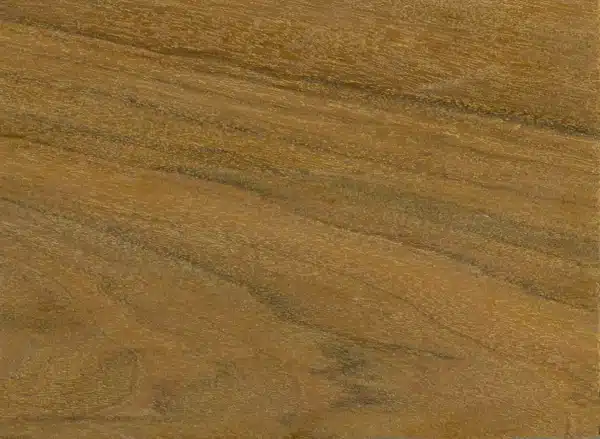
|
Origin |
Northern to central South America |
|
bulk density |
1,2 g / cm³ |
|
durability class |
1 |
|
radial shrinkage |
0,25% |
|
Tangential shrinkage |
0,41% |
|
wood color |
brown to olive |
|
wood structure |
fine-pored and dense |
|
Usage |
Terrace wood |
Ipe is the name for the wood of several South American tree species. The trees of the subgenus Lapacho in this family produce a very hard and heavy wood of high quality. It has a very high resistance to wood-destroying fungi and very good technical properties. In terms of dimensional stability and the risk of splintering, Ipe Lapacho is the only wood that can approach the excellent values of teak.
Good but endangered
Due to its high quality, Ipe was heavily farmed in the past. The deciduous tree, referred to by the indigenous population as the "tree of life", has already completely disappeared from the primeval forests in many regions. The massive impact has prompted some Latin American countries to place the tree under special protection. However, the majority of countries deny the lapacho tree this special protection, which is why it is still available on the European market.
No afforestation of Ipe Lapacho
So far, no Ipe wood is available that comes from sustainable reforestation projects. Therefore, the high demand has a direct impact on the population in the primary forests. An alternative to Ipe is the type of wood Cumaru.
More than just wood
The inner bark of the lapacho tree has been used to prepare tea since the Incas. It is said to have numerous healing effects.
Sources: Wood ABC GD wood, tropix, Wikipedia
ab 6,10 €
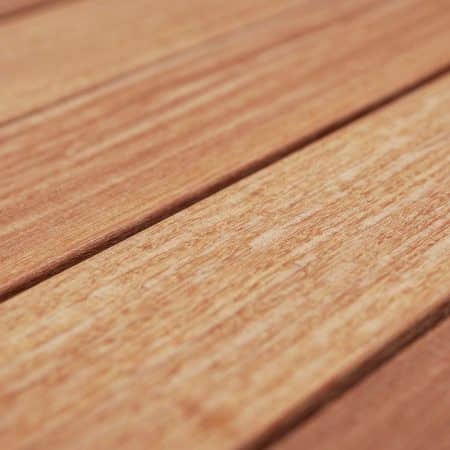
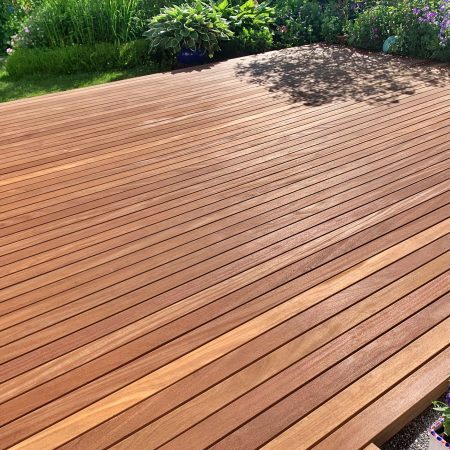
Cumaru decking, FSC 100%
Price from: €70 per m2, resistance class: 1
Advantages: ✓ best durability ✓ particularly robust and scratch-resistant
Disadvantages: ✗ partly rough surface ✗ high power development
Tip: Sand the floorboards after they have been exposed to the weather for the first time.
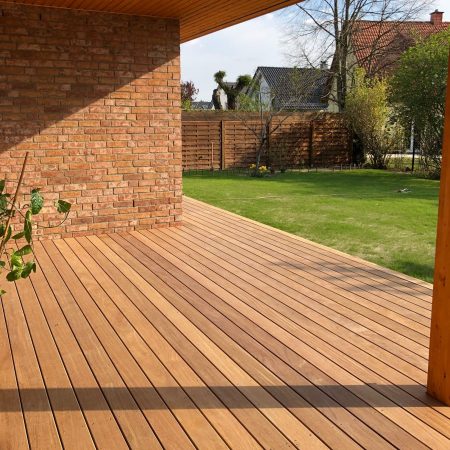
ab 8,75 €
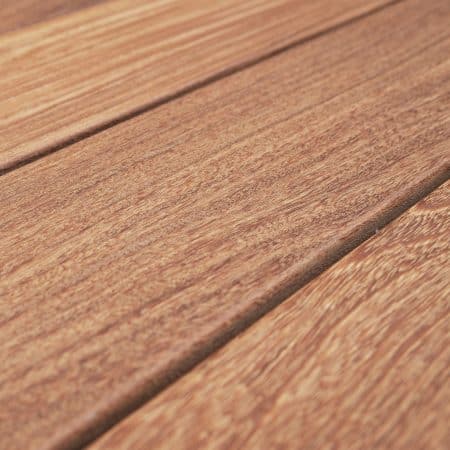
Cumaru decking, FSC 100%
Price from: €70 per m2, resistance class: 1
Advantages: ✓ best durability ✓ particularly robust and scratch-resistant
Disadvantages: ✗ partly rough surface ✗ high power development
Tip: Sand the floorboards after they have been exposed to the weather for the first time.
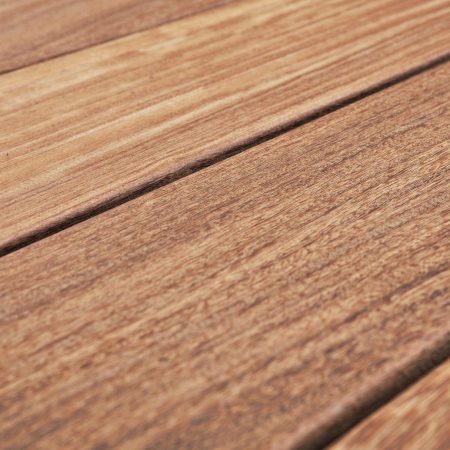
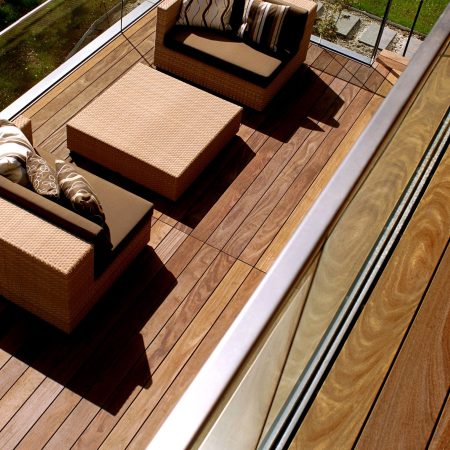
ab 11,50 €
Cumaru decking, FSC 100%
Price from: €70 per m2, resistance class: 1
Advantages: ✓ best durability ✓ particularly robust and scratch-resistant
Disadvantages: ✗ partly rough surface ✗ high power development
Tip: Sand the floorboards after they have been exposed to the weather for the first time.
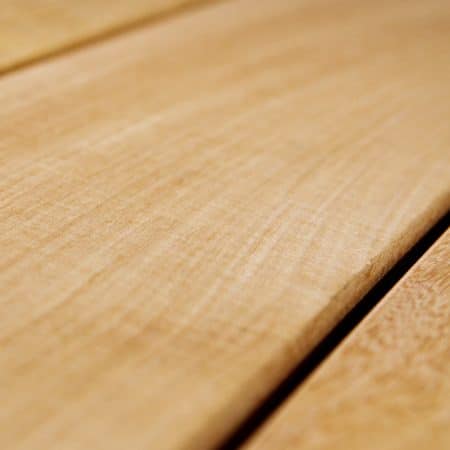
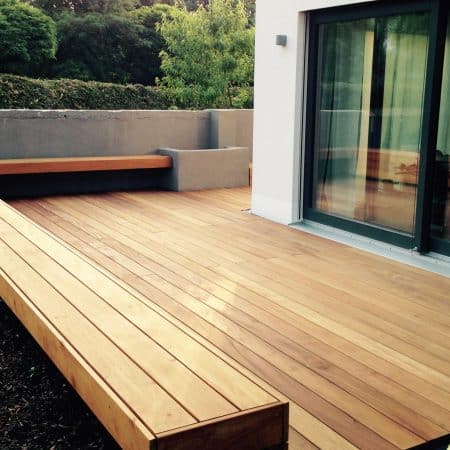
ab 9,10 €
Garapa decking boards, FSC 100%
Price from: €65 per m2, resistance class: 1-2
Advantages: ✓ smooth surface ✓ homogeneous, light color
Disadvantages: ✗ Substances containing iron lead to discoloration ✗ Unscrewed tends to warp
Tip: Patio cleaning removes discoloration and
Professional interim storage avoids delay.
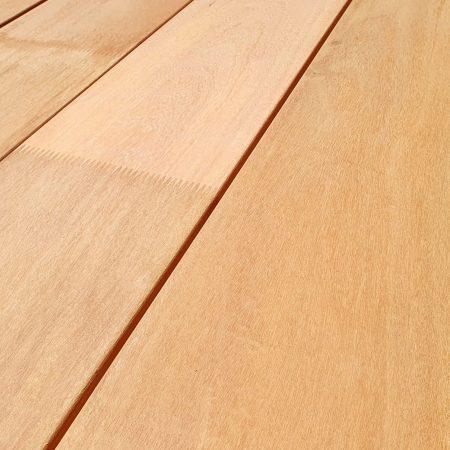
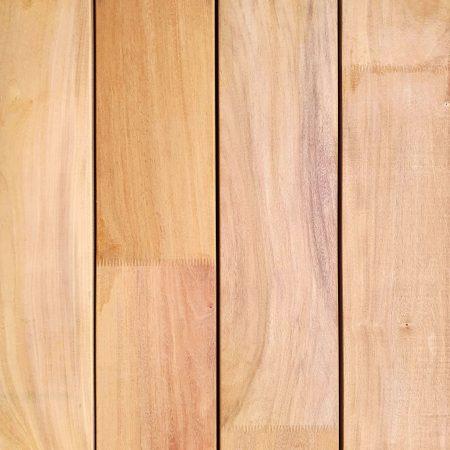
ab 9,80 €
Garapa decking boards, FSC 100%
Price from: €65 per m2, resistance class: 1-2
Advantages: ✓ smooth surface ✓ homogeneous, light color
Disadvantages: ✗ Substances containing iron lead to discoloration ✗ Unscrewed tends to warp
Tip: Patio cleaning removes discoloration and
Professional interim storage avoids delay.
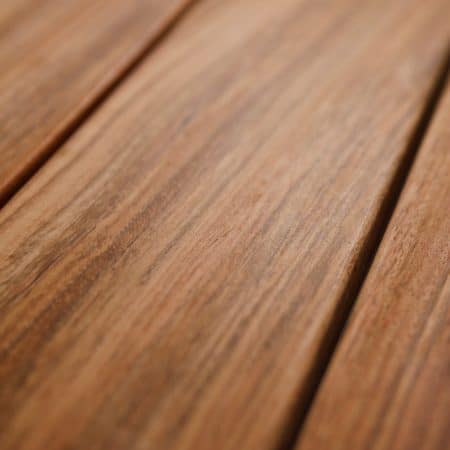
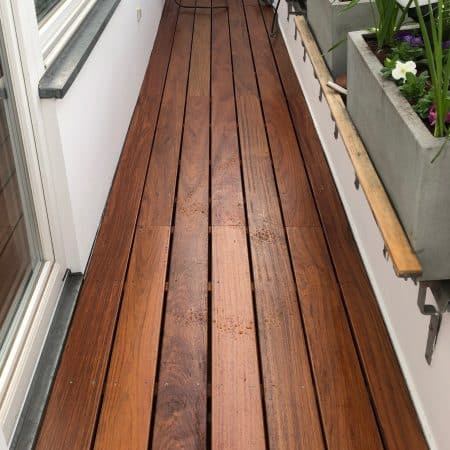
ab 9,10 €
Jatoba decking, FSC 100%
Price from: €65 per m2, resistance class: 1-2
Advantages: ✓ smooth surface ✓ strong color and grain
Disadvantages:✗ unoiled tendency to crack ✗ colored ingredients wash out
Tip: Clean and oil decking boards after installation.
ab 3,50 €
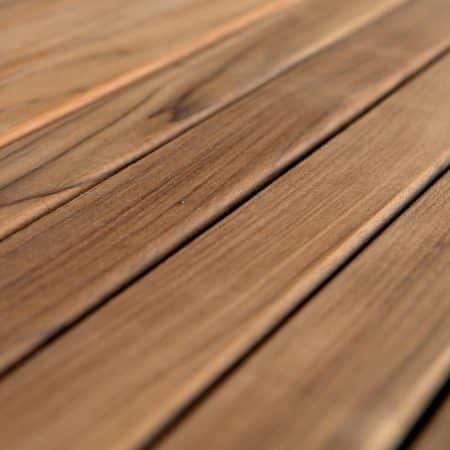
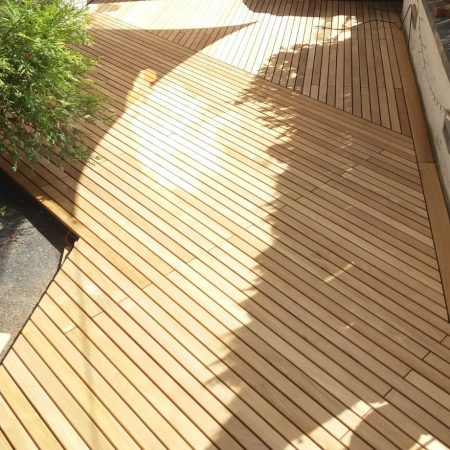
Teak decking, FSC 100%
Price from: €130 per m2, resistance class: 1
Advantages: ✓ Best durability and dimensional stability ✓ Lowest risk of cracks and splinters
Disadvantages: ✗ relatively expensive ✗ not very long boards
Tip: Lay decking boards together.
ab 6,50 €
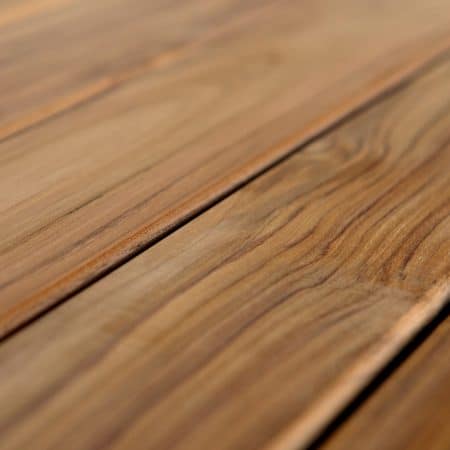
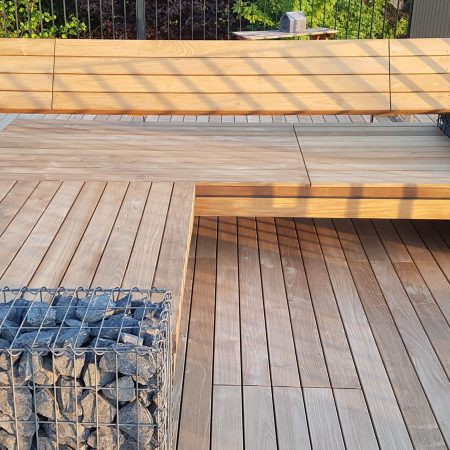
Teak decking, FSC 100%
Price from: €130 per m2, resistance class: 1
Advantages: ✓ Best durability and dimensional stability ✓ Lowest risk of cracks and splinters
Disadvantages: ✗ relatively expensive ✗ not very long boards
Tip: Lay decking boards together.
ab 6,80 €
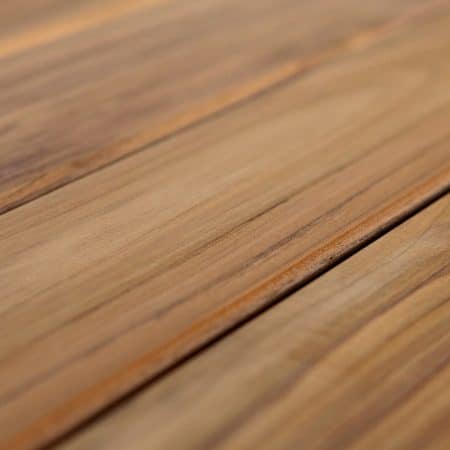
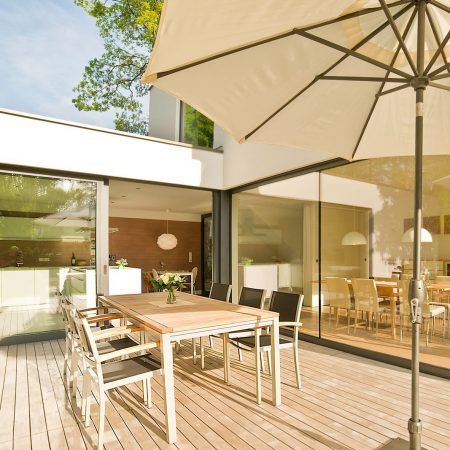
Teak decking, FSC 100%
Price from: €130 per m2, resistance class: 1
Advantages: ✓ Best durability and dimensional stability ✓ Lowest risk of cracks and splinters
Disadvantages: ✗ relatively expensive ✗ not very long boards
Tip: Lay decking boards together.