
Iroko
[I ro ko ]; [Milicia excelsa and Milicia regia]; Kambala (COG, BE); Iroko (CI, D, FR, NL); Abang (CM, GA, GN); Odum (GH)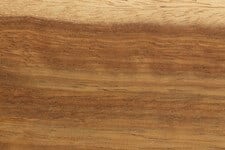
|
Origin |
from all African woodlands |
|
bulk density |
0,55-0,65-0,75 g/cm³ |
|
durability class |
1-2 |
|
radial shrinkage |
0,13-0,19% |
|
Tangential shrinkage |
0,25-0,28% |
|
wood color |
golden brown |
|
wood structure |
coarse-pored |
|
Usage |
exterior construction |
Iroko, also known as Kambala, refers to both Milicia excelsa and Milicia regia from the Moraceae family. Due to its limited availability, this structural wood is only imported into the EU in small quantities. The Milicia species are large trees with simple, pinnate leaves that are alternate and arranged in two rows. The flowers are arranged in axillary, spike-like inflorescences, with male flowers having four stamens and female flowers having clearly visible stigmas. The drupes are fleshy and greenish. Iroko/Kambala is one of the most common types of wood in Africa and is valued for its technical properties, especially in outdoor construction.
However, hardly any wood from FSC®-certified forestry is available. Large parts of the savannah forest, for example, have been destroyed as a result of the considerable raw manure and use of the wood species.
Iroko is also characterized by its golden brown wood with a yellowish-white sapwood. The heartwood varies from yellowish to greenish and darkens to a golden-olive brown to chocolate brown tone. The grain can be straight or alternate-twisted, resulting in a matt-glossy decorative texture. The coarse-pored wood with striking eye-shaped storage tissue is easy to work with, but shows possible fiber tearing due to strong interlocking growth. Iroko is suitable for outdoor construction thanks to its high natural durability, both with and without earth contact. It is used in landscaping, garden furniture, children's play areas, windows, doors, winter gardens, stairs, parquet, furniture and even in shipbuilding. The wood is resistant to wood-destroying fungi and insects.
Sources: Wood ABC GD wood, tropix, Wikipedia
ab 6,10 €
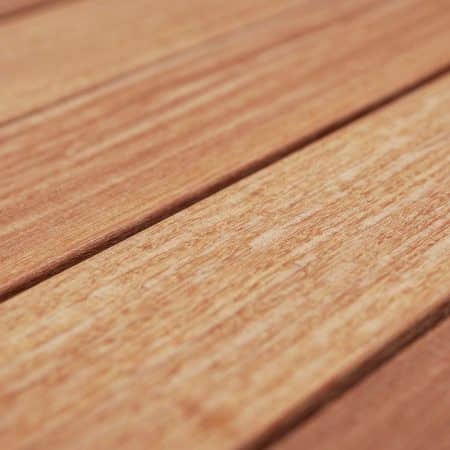
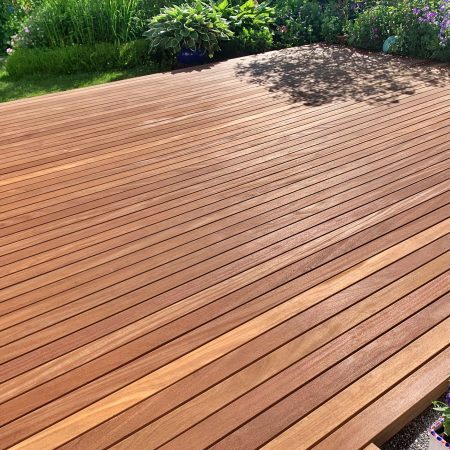
Cumaru decking, FSC 100%
Price from: €70 per m2, resistance class: 1
Advantages: ✓ best durability ✓ particularly robust and scratch-resistant
Disadvantages: ✗ partly rough surface ✗ high power development
Tip: Sand the floorboards after they have been exposed to the weather for the first time.
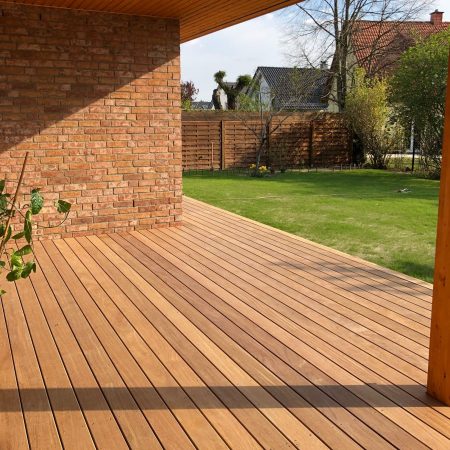
ab 8,75 €
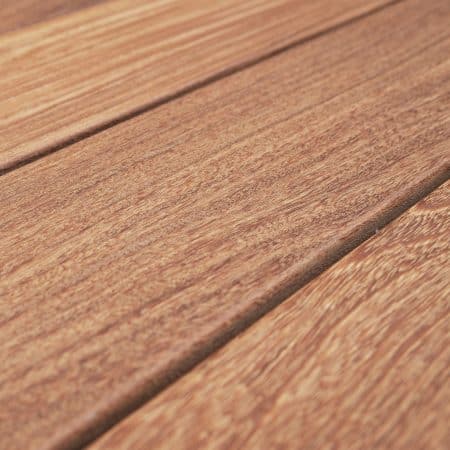
Cumaru decking, FSC 100%
Price from: €70 per m2, resistance class: 1
Advantages: ✓ best durability ✓ particularly robust and scratch-resistant
Disadvantages: ✗ partly rough surface ✗ high power development
Tip: Sand the floorboards after they have been exposed to the weather for the first time.
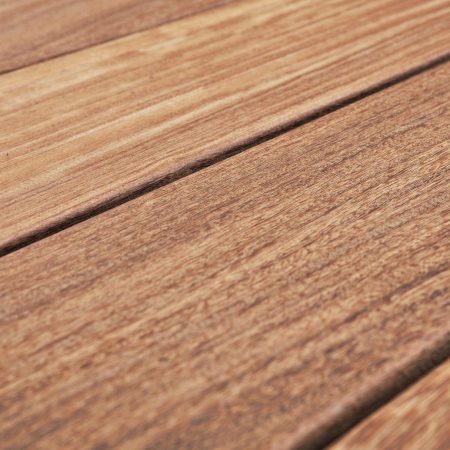
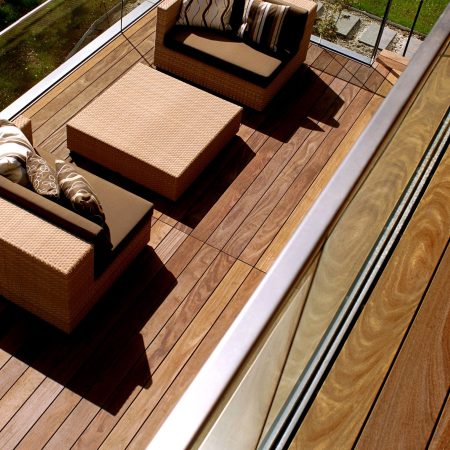
ab 11,50 €
Cumaru decking, FSC 100%
Price from: €70 per m2, resistance class: 1
Advantages: ✓ best durability ✓ particularly robust and scratch-resistant
Disadvantages: ✗ partly rough surface ✗ high power development
Tip: Sand the floorboards after they have been exposed to the weather for the first time.
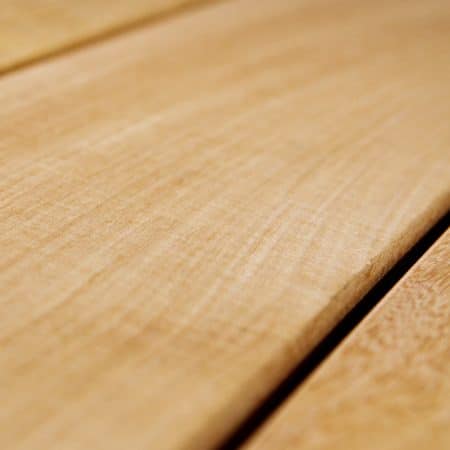
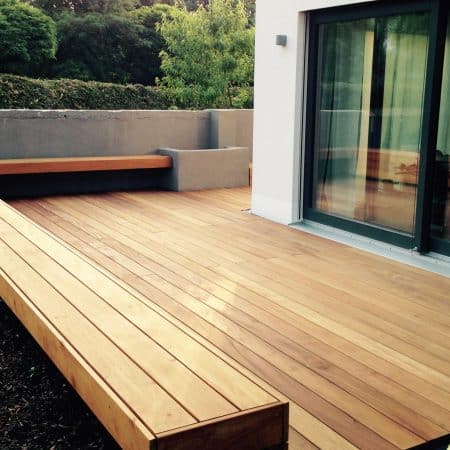
ab 9,10 €
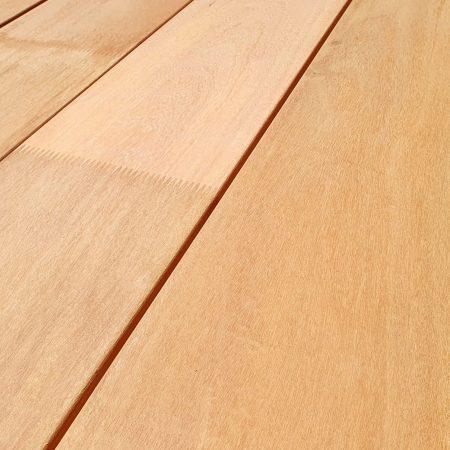
Garapa decking boards, FSC 100%
Price from: €65 per m2, resistance class: 1-2
Advantages: ✓ smooth surface ✓ homogeneous, light color
Disadvantages: ✗ Substances containing iron lead to discoloration ✗ Unscrewed tends to warp
Tip: Patio cleaning removes discoloration and
Professional interim storage avoids delay.
ab 9,80 €
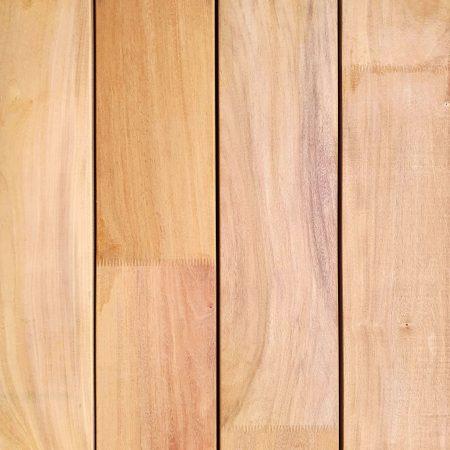
Garapa decking boards, FSC 100%
Price from: €65 per m2, resistance class: 1-2
Advantages: ✓ smooth surface ✓ homogeneous, light color
Disadvantages: ✗ Substances containing iron lead to discoloration ✗ Unscrewed tends to warp
Tip: Patio cleaning removes discoloration and
Professional interim storage avoids delay.
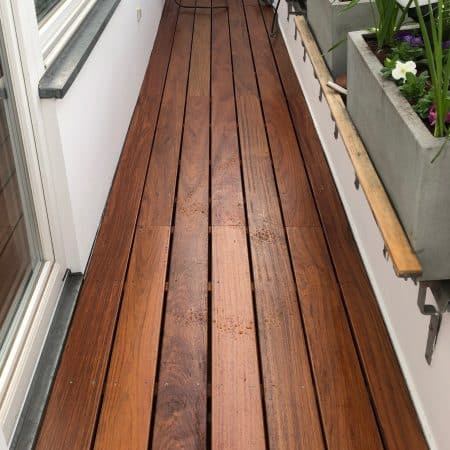
ab 9,10 €
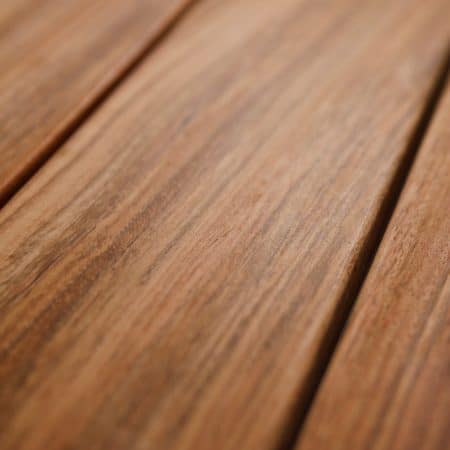
Jatoba decking, FSC 100%
Price from: €65 per m2, resistance class: 1-2
Advantages: ✓ smooth surface ✓ strong color and grain
Disadvantages:✗ unoiled tendency to crack ✗ colored ingredients wash out
Tip: Clean and oil decking boards after installation.
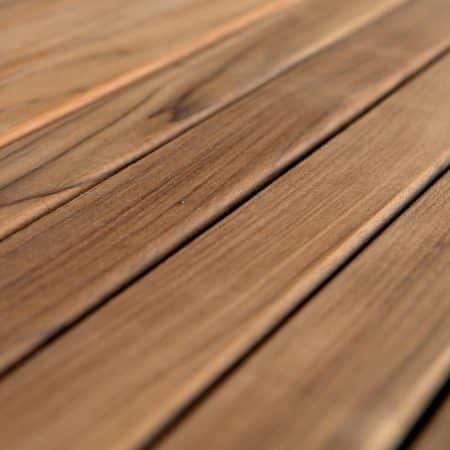
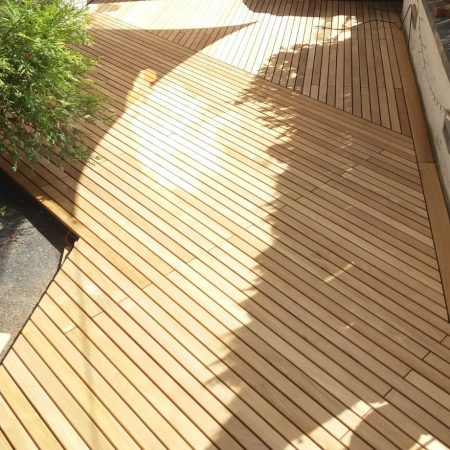
ab 3,50 €
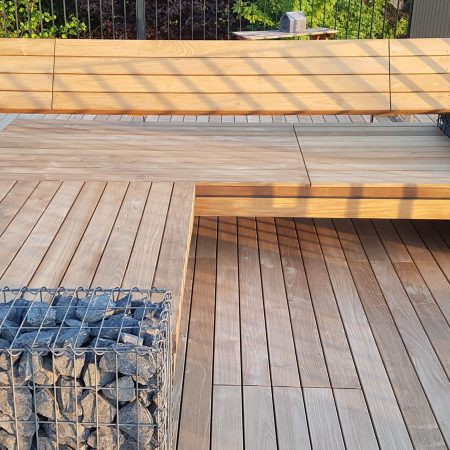
Teak decking, FSC 100%
Price from: €130 per m2, resistance class: 1
Advantages: ✓ Best durability and dimensional stability ✓ Lowest risk of cracks and splinters
Disadvantages: ✗ relatively expensive ✗ not very long boards
Tip: Lay decking boards together.
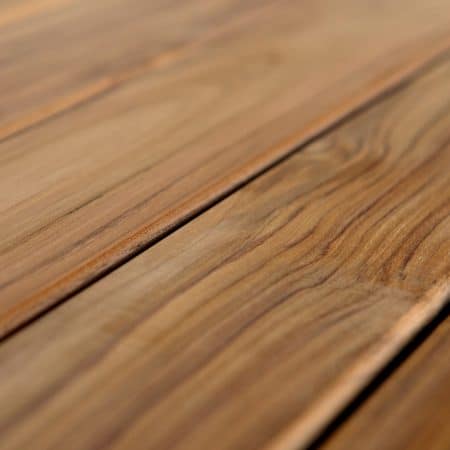
ab 6,50 €
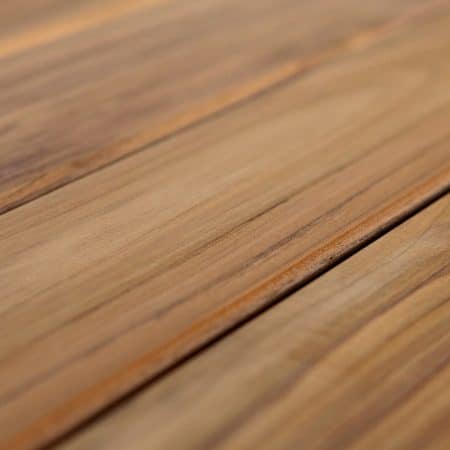
Teak decking, FSC 100%
Price from: €130 per m2, resistance class: 1
Advantages: ✓ Best durability and dimensional stability ✓ Lowest risk of cracks and splinters
Disadvantages: ✗ relatively expensive ✗ not very long boards
Tip: Lay decking boards together.
ab 6,80 €
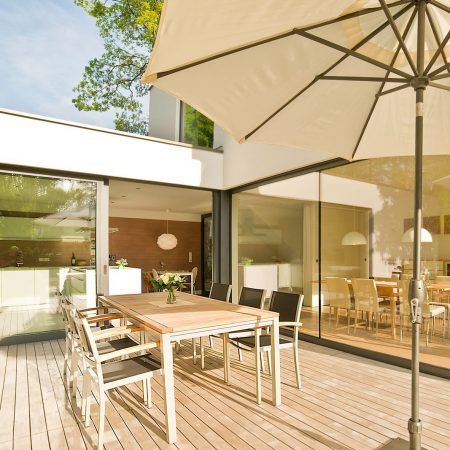
Teak decking, FSC 100%
Price from: €130 per m2, resistance class: 1
Advantages: ✓ Best durability and dimensional stability ✓ Lowest risk of cracks and splinters
Disadvantages: ✗ relatively expensive ✗ not very long boards
Tip: Lay decking boards together.