
jatoba
[Yes to ba]; [Hymenaea courbaril]; courbaril (D, FR, GY); jatoba (BR)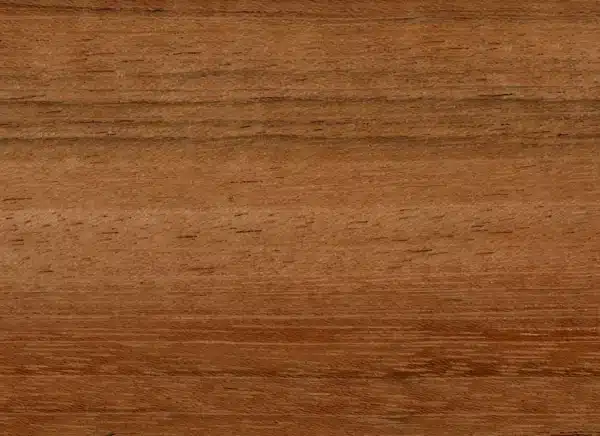
|
Origin |
Northern to central South America |
|
bulk density |
1050 kg / m³ |
|
Lifespan |
at least 20 years |
|
radial shrinkage |
4,0% |
|
Tangential shrinkage |
7,4% |
|
wood color |
different reddish |
|
wood structure |
slightly porous |
|
Usage |
Furniture wood, construction |
Jatobá, also known as Courbaril, belongs to the genus Hymenaea and is mainly sourced from Brazil. The wood is enjoying increasing demand in the European market, particularly in parquet and horticulture. Due to its decorative character, Jatobá is suitable for high-quality interior work, especially for solid wood parquet. The horticultural industry values it for its long-lasting properties. Certified wood is available. The evergreen tree Hymenaea courbaril can reach a height of 30-40 meters and produces yellowish to reddish resin called copal. Its dense, umbrella-shaped flower structure is characteristic.
Jatobá is also characterized by a 6-12 cm wide sapwood in whitish-beige and a heartwood that ranges from orange to red-brown to violet-brown. It has a porous structure and a matt shine. The above-average hardness requires sharp tools for machining, while the tendency to warp is low. The bondability is good, but pre-drilling is necessary for nails and screws. Jatobá is easy to cut and the surface coating is easy. The soakability of the core, however, is poor. Drying requires care due to its high density. The wood is used in various areas thanks to its resistance, even if the workability is considered poor.
Sources: Wikipedia, Wood from the specialist (GD Wood)
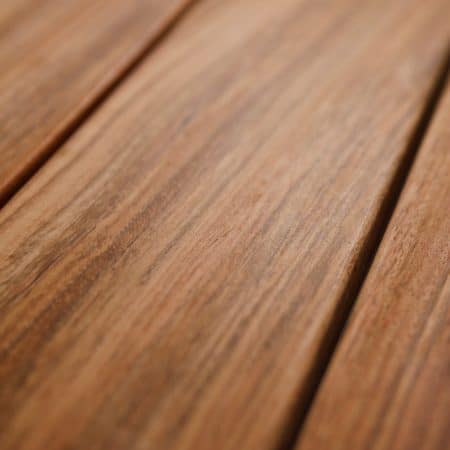
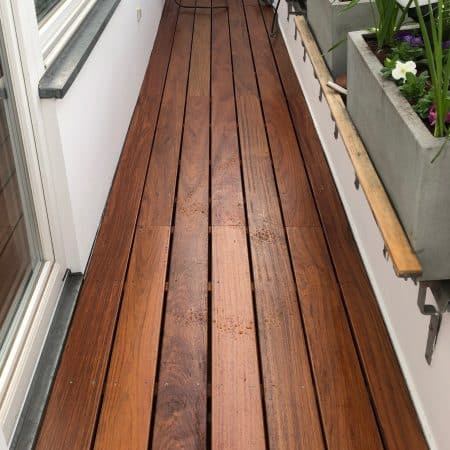
ab 9,26 €
Jatoba decking, FSC 100%
Price from: €65 per m2, resistance class: 1-2
Advantages: ✓ smooth surface ✓ strong color and grain
Disadvantages:✗ unoiled tendency to crack ✗ colored ingredients wash out
Tip: Clean and oil decking boards after installation.
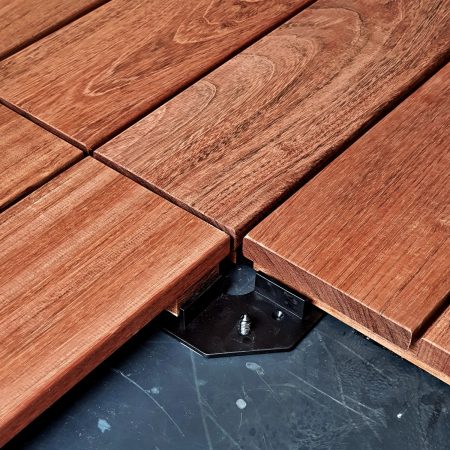
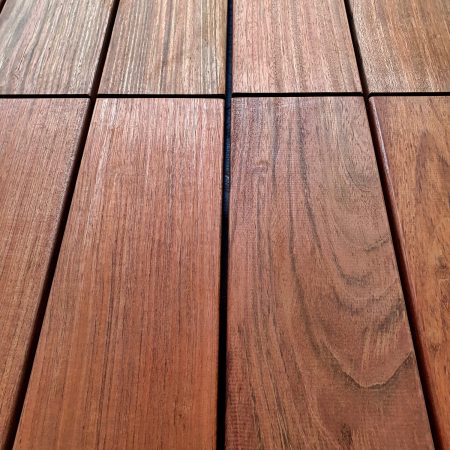
ab 172,86 € m²
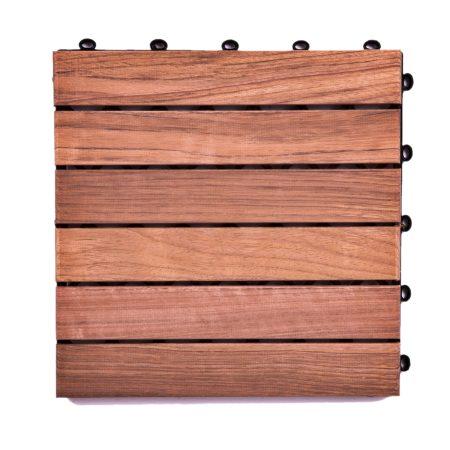
6,61 €
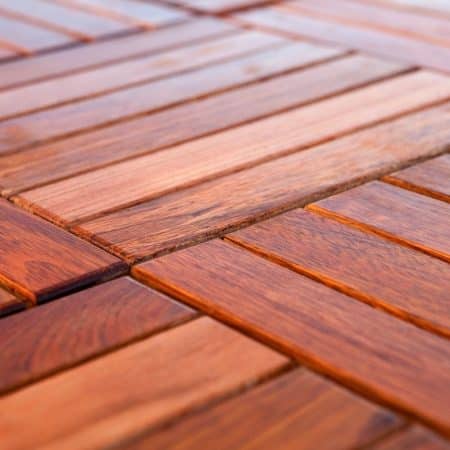
Jatoba wood tiles, FSC 100%
Price from: €72 per m2, resistance class: 1-2
Advantages: ✓ smooth surface ✓ strong color and grain
Disadvantages:✗ unoiled tendency to crack ✗ colored ingredients wash out
Tip:Clean and oil tiles after installation.