
Kamala
[Kam·ba·la]; [Milicia excelsa and Milicia regia]; Kambala (COG, BE); Iroko (CI, D, FR, NL); Abang (CM, GA, GN); Odum (GH)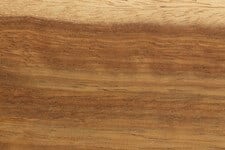
|
Origin |
from all African woodlands |
|
bulk density |
0,55-0,65-0,75 g/cm³ |
|
durability class |
1-2 |
|
radial shrinkage |
0,13-0,19% |
|
Tangential shrinkage |
0,25-0,28% |
|
wood color |
golden brown |
|
wood structure |
coarse-pored |
|
Usage |
exterior construction |
Kambala or Iroko, known as both Milicia excelsa and Milicia regia, is a highly prized structural wood from the Moraceae family. Excellent for outdoor construction, it is imported into the EU in small quantities due to limited availability. Thanks to its natural durability, Kambala is used in landscaping, for garden furniture, windows, doors, stairs and indoor parquet. The acid/base resistance makes it desirable for chemical industry liquid containers and laboratory benches. The versatility even extends to shipbuilding.
Kambala is often referred to as Iroko. For further information, please read our encyclopedia article on the type of wood Iroko.
Sources: Wood ABC GD wood, tropix, Wikipedia
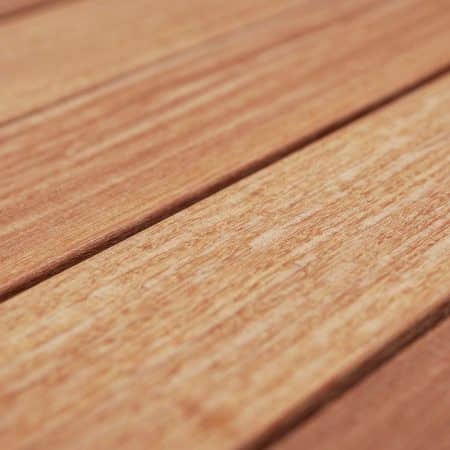
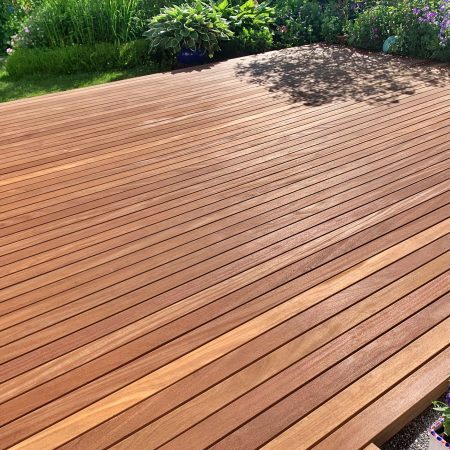
ab 6,10 €
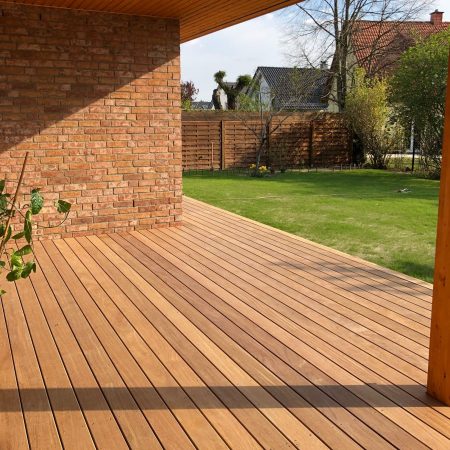
Cumaru decking, FSC 100%
Price from: €70 per m2, resistance class: 1
Advantages: ✓ best durability ✓ particularly robust and scratch-resistant
Disadvantages: ✗ partly rough surface ✗ high power development
Tip: Sand the floorboards after they have been exposed to the weather for the first time.
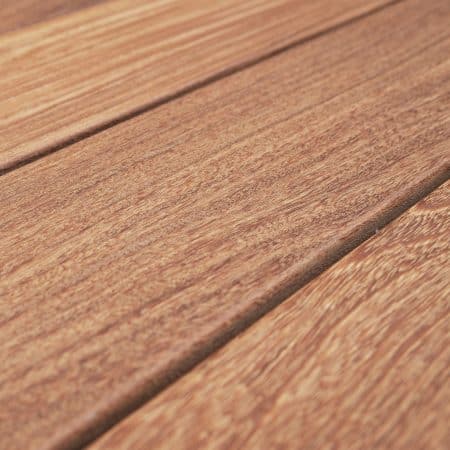
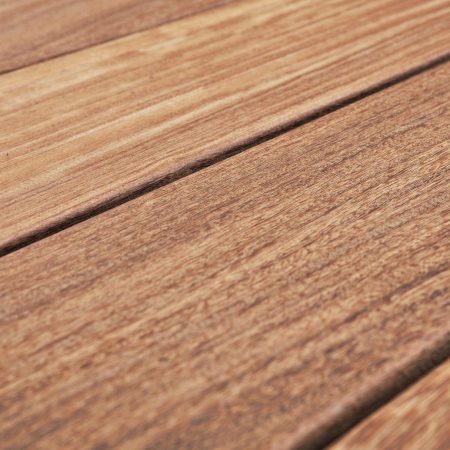
ab 8,75 €
Cumaru decking, FSC 100%
Price from: €70 per m2, resistance class: 1
Advantages: ✓ best durability ✓ particularly robust and scratch-resistant
Disadvantages: ✗ partly rough surface ✗ high power development
Tip: Sand the floorboards after they have been exposed to the weather for the first time.
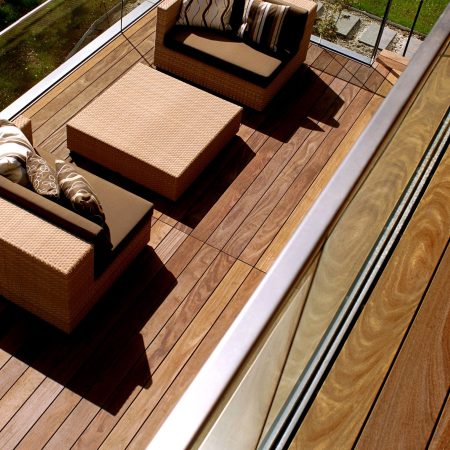
ab 11,50 €
Cumaru decking, FSC 100%
Price from: €70 per m2, resistance class: 1
Advantages: ✓ best durability ✓ particularly robust and scratch-resistant
Disadvantages: ✗ partly rough surface ✗ high power development
Tip: Sand the floorboards after they have been exposed to the weather for the first time.
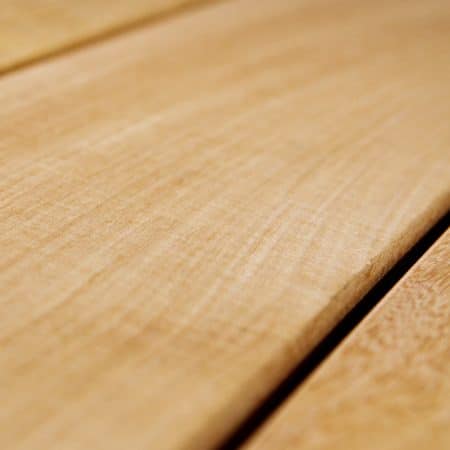
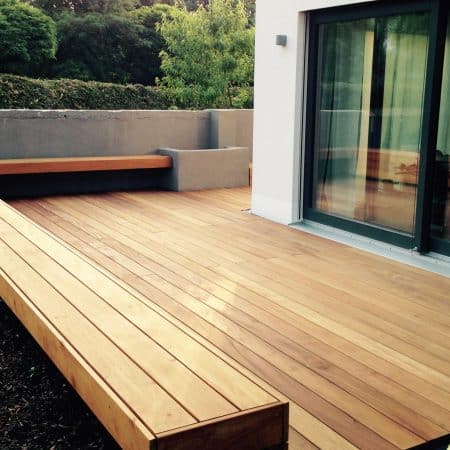
ab 9,10 €
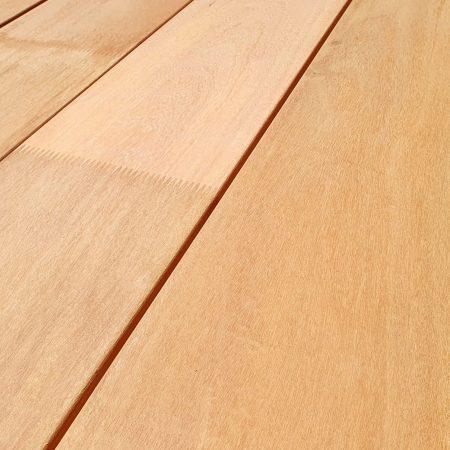
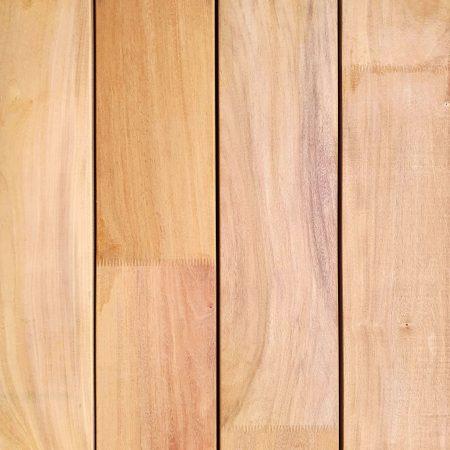
Garapa decking boards, FSC 100%
Price from: €65 per m2, resistance class: 1-2
Advantages: ✓ smooth surface ✓ homogeneous, light color
Disadvantages: ✗ Substances containing iron lead to discoloration ✗ Unscrewed tends to warp
Tip: Patio cleaning removes discoloration and
Professional interim storage avoids delay.
ab 9,80 €
Garapa decking boards, FSC 100%
Price from: €65 per m2, resistance class: 1-2
Advantages: ✓ smooth surface ✓ homogeneous, light color
Disadvantages: ✗ Substances containing iron lead to discoloration ✗ Unscrewed tends to warp
Tip: Patio cleaning removes discoloration and
Professional interim storage avoids delay.
ab 9,10 €
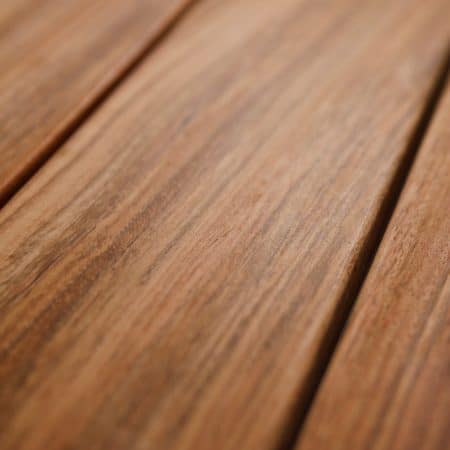
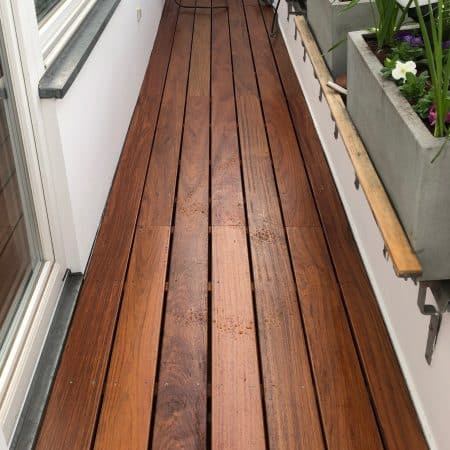
Jatoba decking, FSC 100%
Price from: €65 per m2, resistance class: 1-2
Advantages: ✓ smooth surface ✓ strong color and grain
Disadvantages:✗ unoiled tendency to crack ✗ colored ingredients wash out
Tip: Clean and oil decking boards after installation.
ab 3,50 €
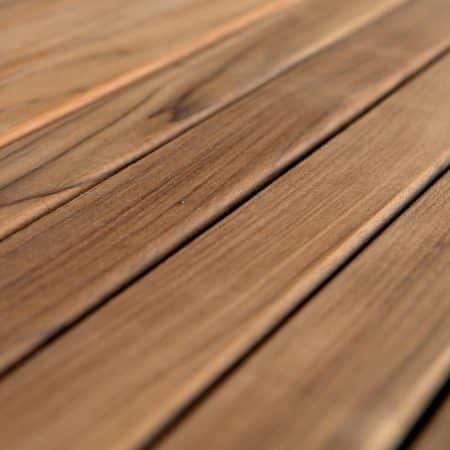
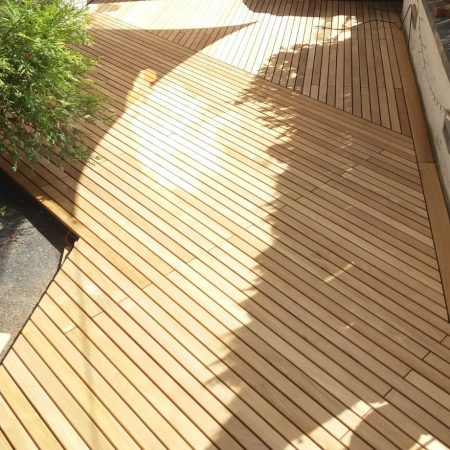
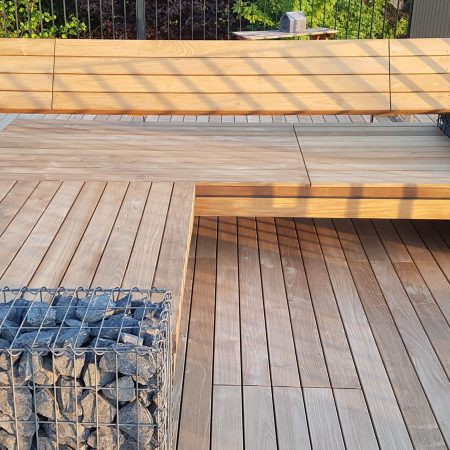
Teak decking, FSC 100%
Price from: €130 per m2, resistance class: 1
Advantages: ✓ Best durability and dimensional stability ✓ Lowest risk of cracks and splinters
Disadvantages: ✗ relatively expensive ✗ not very long boards
Tip: Lay decking boards together.
ab 6,50 €
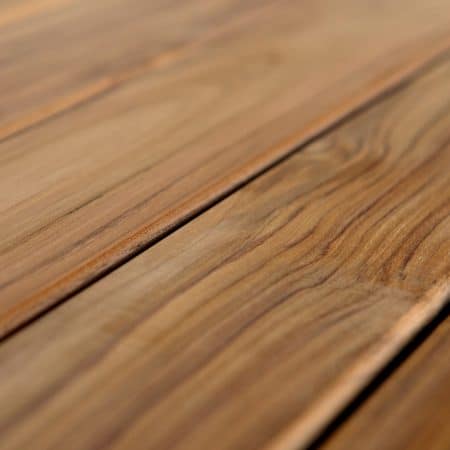
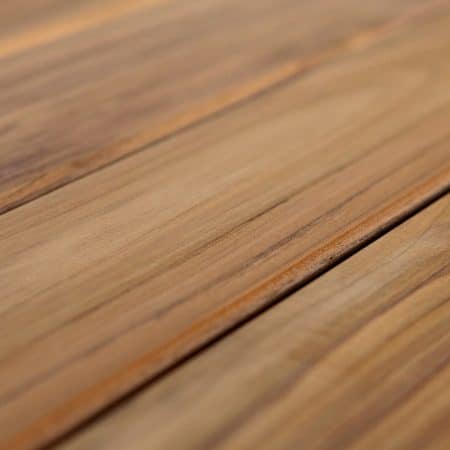
Teak decking, FSC 100%
Price from: €130 per m2, resistance class: 1
Advantages: ✓ Best durability and dimensional stability ✓ Lowest risk of cracks and splinters
Disadvantages: ✗ relatively expensive ✗ not very long boards
Tip: Lay decking boards together.
ab 6,80 €
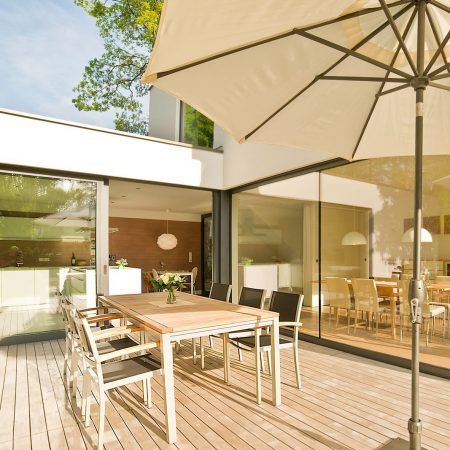
Teak decking, FSC 100%
Price from: €130 per m2, resistance class: 1
Advantages: ✓ Best durability and dimensional stability ✓ Lowest risk of cracks and splinters
Disadvantages: ✗ relatively expensive ✗ not very long boards
Tip: Lay decking boards together.