
larch
[Larch]; [Larix decidua]; Trade names: (European) Larch (GB); Meleze (FR); Larice (IT); Lariks (NL); Alerce de Europa (ES)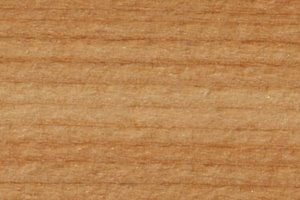
|
Origin |
Europe, temperate climate zones |
|
bulk density |
470-620 kg/m³ |
|
durability class |
2-4 |
|
radial shrinkage |
0,14 - 0,18% |
|
Tangential shrinkage |
0,28 - 0,36% |
|
wood color |
yellowish to reddish to orange-brown |
|
wood structure |
straight grained |
|
Usage |
Window and door frames, floors, furniture |
The native larch has gained in importance in German gardening and landscaping since the 90s, particularly due to the tropical wood discussion. Due to the limited supply (approx. 3% of the German forest area), the increasing demand is covered by imports of high-quality Siberian larch (Larix gmelinii, Larix sibirica). Larch trees, which belong to the pine family, are native to temperate climate zones in the northern hemisphere, especially in the northern jungles of central and eastern Siberia. All larch species are deciduous trees and shed their needle-shaped leaves in late autumn. This distinguishes them from evergreen pines. The bark of young trees is silver-gray to gray-brown, later reddish-brown to brown. Imports of the Siberian larch supplement the German offer, which does not sufficiently meet the increasing demand.
The European larch, with its pale reddish and narrow sapwood, is characterized by its yellowish to reddish-orange-brown heartwood, which darkens considerably. The distinctive annual ring structure with flaps or stripes gives the softwood a decorative character. Due to its hardness, larch is one of the robust softwoods, which means that it can be processed efficiently by machines and craftsmen. The wood dries quickly, but shows a certain tendency to crack and deform. European larch is a versatile structural timber for medium-duty indoor and outdoor applications. It is used particularly in gardening and landscaping, for window and door frames, floors, furniture, paneling and interior doors
In East Hesse, the tallest larch in Europe and the world is located in the Schlitzer Forest, measured in 2014 with a height of 54,80 meters and a circumference of 2,52 meters. The “Schlitzer Lärchen” form a group of around 1500 tall trees. The Hildegard larch on Lake Constance is probably the thickest and oldest tree with a height of 45 meters and a circumference of 4,75 meters. In Switzerland, a larch tree with a trunk circumference of 10,70 meters is impressive. A Western American larch tree native to the Lolo National Forest in Montana, called the “Seeley Lake Giant”, is characterized by impressive dimensions: 49,4 meters high, 2,21 meter trunk diameter and 83 m³ trunk volume. The oldest find is the Shigir idol made from a larch tree, discovered in the Transurals and dated to around 11.000 years ago.
Sources: Wikipedia, Wood from the specialist (GD Wood)
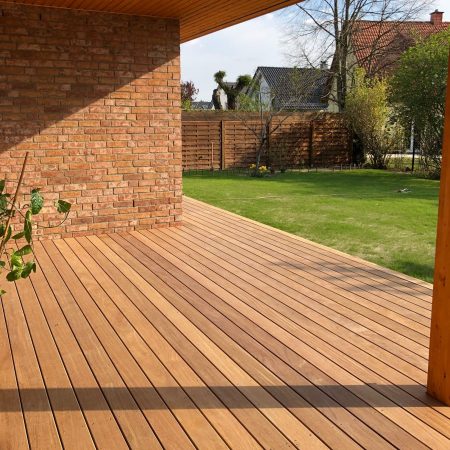
ab 6,10 €
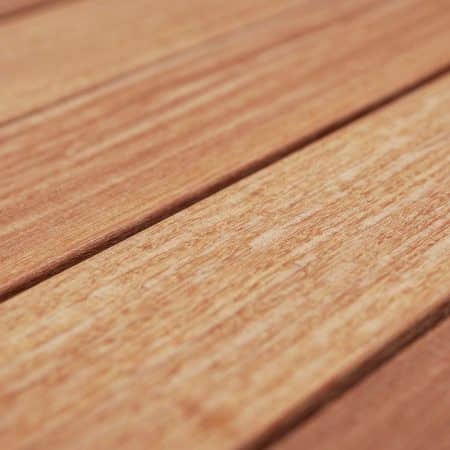
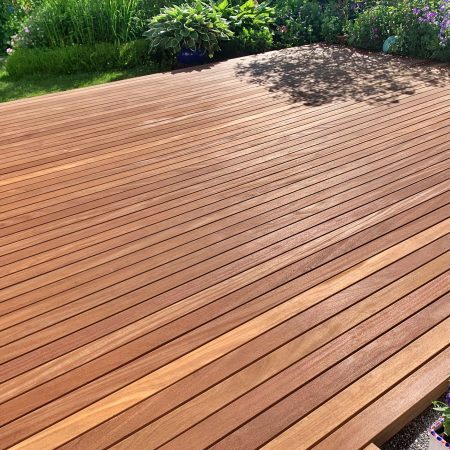
Cumaru decking, FSC 100%
Price from: €70 per m2, resistance class: 1
Advantages: ✓ best durability ✓ particularly robust and scratch-resistant
Disadvantages: ✗ partly rough surface ✗ high power development
Tip: Sand the floorboards after they have been exposed to the weather for the first time.
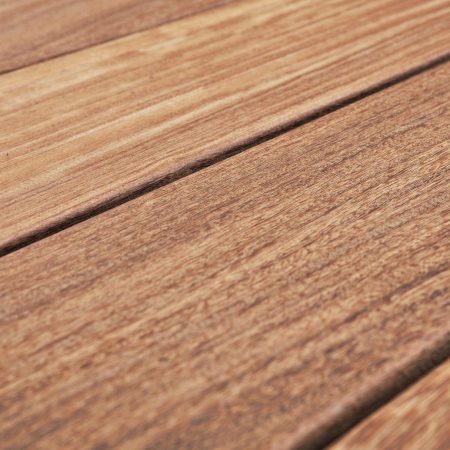
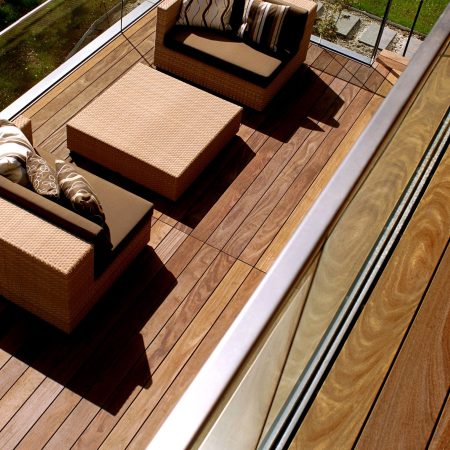
ab 8,75 €
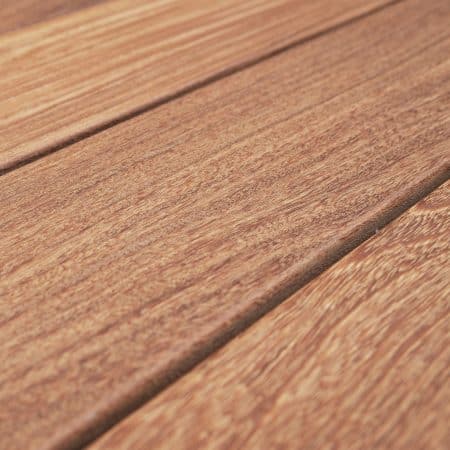
Cumaru decking, FSC 100%
Price from: €70 per m2, resistance class: 1
Advantages: ✓ best durability ✓ particularly robust and scratch-resistant
Disadvantages: ✗ partly rough surface ✗ high power development
Tip: Sand the floorboards after they have been exposed to the weather for the first time.
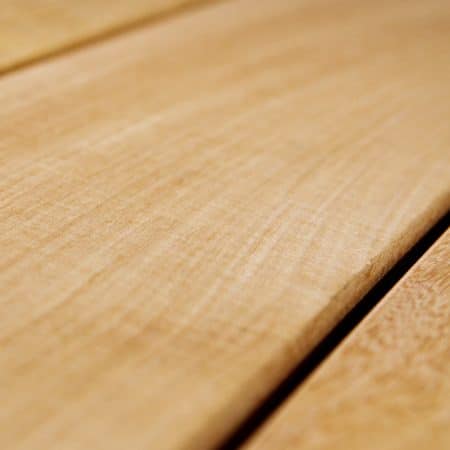
ab 11,50 €
Cumaru decking, FSC 100%
Price from: €70 per m2, resistance class: 1
Advantages: ✓ best durability ✓ particularly robust and scratch-resistant
Disadvantages: ✗ partly rough surface ✗ high power development
Tip: Sand the floorboards after they have been exposed to the weather for the first time.
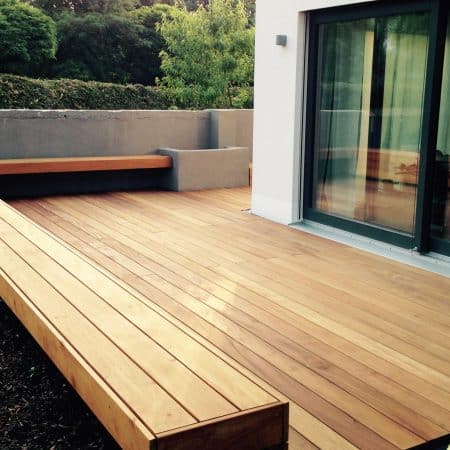
ab 9,10 €
Garapa decking boards, FSC 100%
Price from: €65 per m2, resistance class: 1-2
Advantages: ✓ smooth surface ✓ homogeneous, light color
Disadvantages: ✗ Substances containing iron lead to discoloration ✗ Unscrewed tends to warp
Tip: Patio cleaning removes discoloration and
Professional interim storage avoids delay.
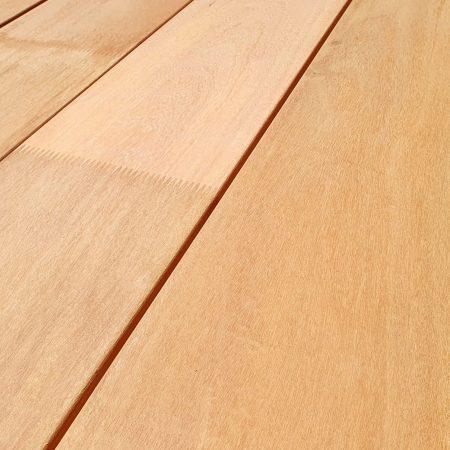
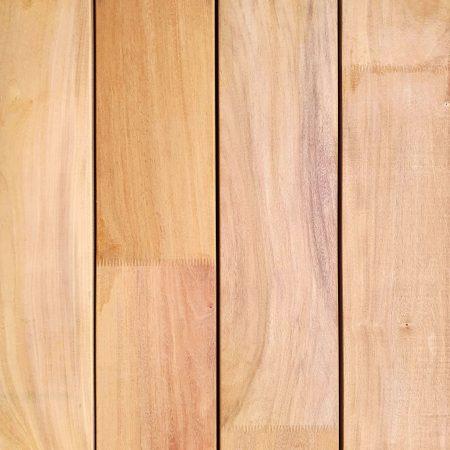
ab 9,80 €
Garapa decking boards, FSC 100%
Price from: €65 per m2, resistance class: 1-2
Advantages: ✓ smooth surface ✓ homogeneous, light color
Disadvantages: ✗ Substances containing iron lead to discoloration ✗ Unscrewed tends to warp
Tip: Patio cleaning removes discoloration and
Professional interim storage avoids delay.
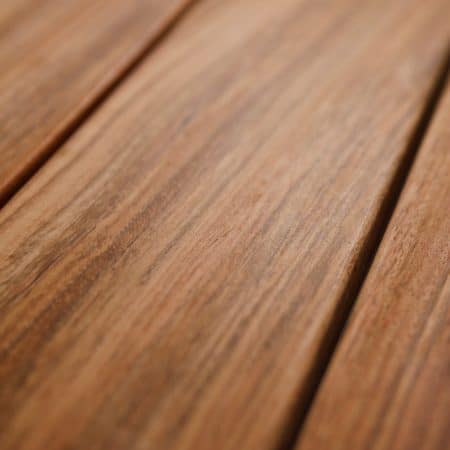
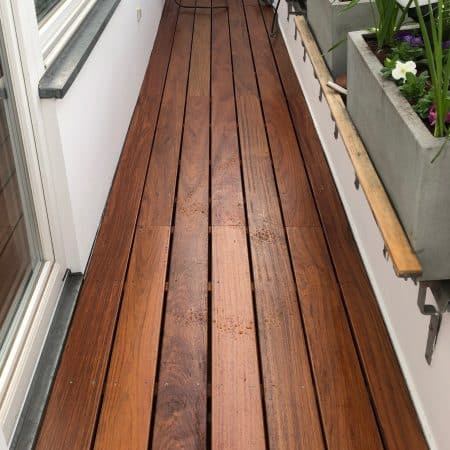
ab 9,10 €
Jatoba decking, FSC 100%
Price from: €65 per m2, resistance class: 1-2
Advantages: ✓ smooth surface ✓ strong color and grain
Disadvantages:✗ unoiled tendency to crack ✗ colored ingredients wash out
Tip: Clean and oil decking boards after installation.
ab 3,50 €
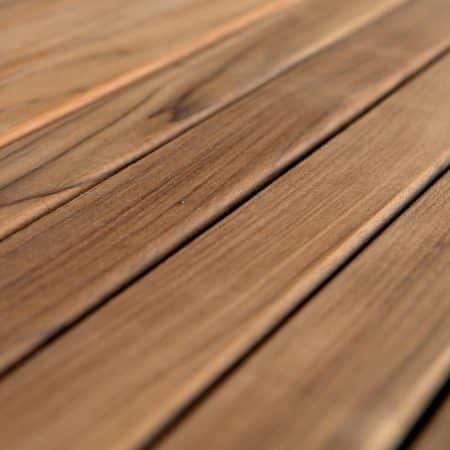
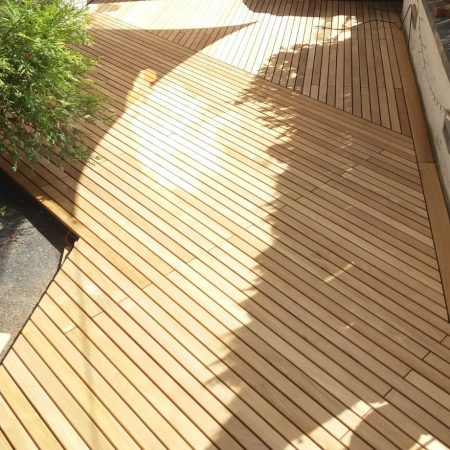
Teak decking, FSC 100%
Price from: €130 per m2, resistance class: 1
Advantages: ✓ Best durability and dimensional stability ✓ Lowest risk of cracks and splinters
Disadvantages: ✗ relatively expensive ✗ not very long boards
Tip: Lay decking boards together.
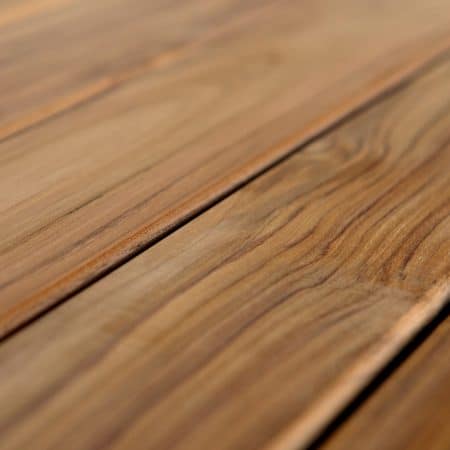
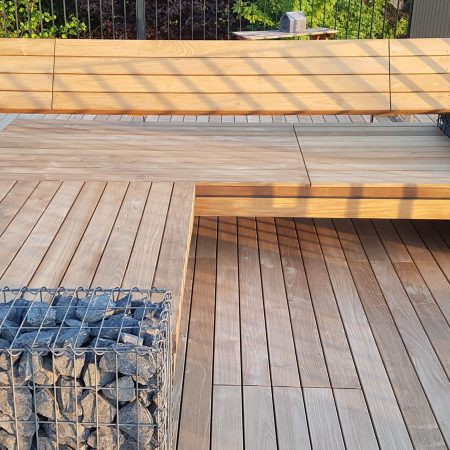
ab 6,50 €
Teak decking, FSC 100%
Price from: €130 per m2, resistance class: 1
Advantages: ✓ Best durability and dimensional stability ✓ Lowest risk of cracks and splinters
Disadvantages: ✗ relatively expensive ✗ not very long boards
Tip: Lay decking boards together.
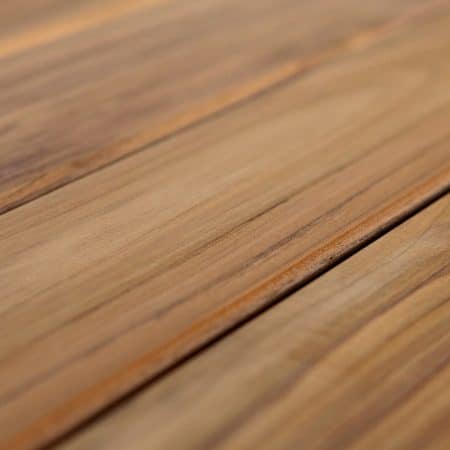
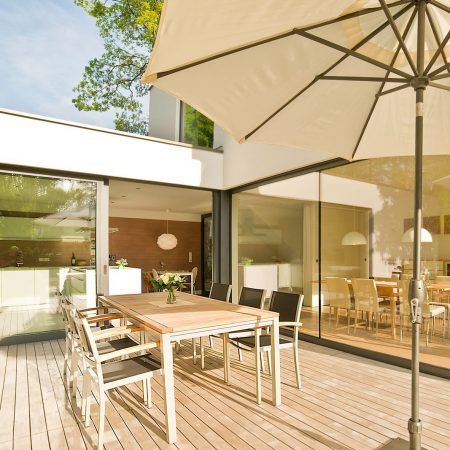
ab 6,80 €
Teak decking, FSC 100%
Price from: €130 per m2, resistance class: 1
Advantages: ✓ Best durability and dimensional stability ✓ Lowest risk of cracks and splinters
Disadvantages: ✗ relatively expensive ✗ not very long boards
Tip: Lay decking boards together.