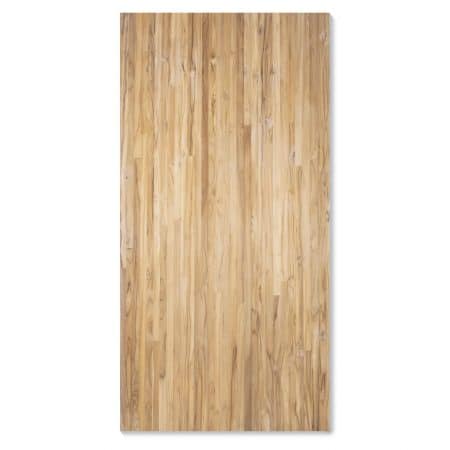
mahogany
[Ma·ha·go·ni];[Swietenia macrophylla]; Trade name: Real Mahogany (DE), American Mahogany (UK, US), Caoba (MX)
|
Origin |
Middle and South America |
|
bulk density |
490-590 kg/m³ |
|
durability class |
2 |
|
radial shrinkage |
0,11 - 0,15% |
|
Tangential shrinkage |
0,17 - 0,23% |
|
wood color |
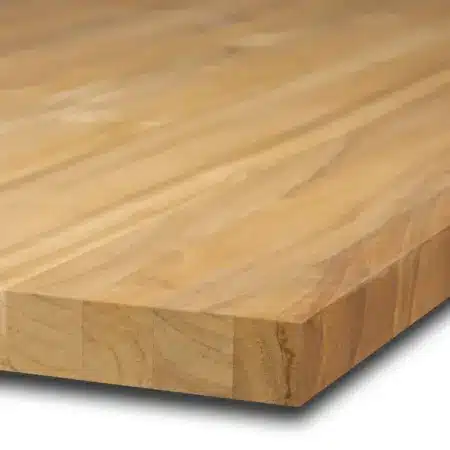
light to dark reddish brown with a golden sheen |
|
wood structure |
medium-sized pores, often filled with dark, sometimes also with white, non-mineral core substances, fiber orientation mostly with interlocked grain |
|
Usage |
as solid wood ; Windows, doors, furniture, in ship, yacht and sports boat construction |
American mahogany, a trade name, primarily includes the three species of the Swietenia genus, primarily Swietenia macrophylla from the Neotropics. Previously coming from the species Swietenia mahagoni and Swietenia humilis, today mahogany wood is mainly sold from Swietenia macrophylla. The severely depleted stocks of Swietenia mahagoni are used locally, while the heavier wood of Swietenia humilis is rarely traded. Real mahogany from Swietenia macrophylla plantations in Southeast Asia is increasingly being offered. All species are subject to the Washington Convention on International Trade in Endangered Species (CITES) and are listed there in Appendix B. Import bans and local regulations must be observed in Germany, especially on the website Federal Agency for Nature Conservation (BfN). Swietenia macrophylla, with shiny leaves and extensive dispersal by wind and seeds, is a majestic tree that dominates the tropical rainforest canopy. Cultivation in plantations is a sustainable alternative to relieve pressure on wild populations. Mahogany is not available from sustainable FSC®-certified sources.
Swietenia macrophylla, the American mahogany, enjoys the highest commercial recognition due to its extensive distribution area. Its high-quality wood is traded under various trade names such as Brazil, Honduras, Amazon, Nicaragua or Tabasco mahogany. In international markets, it fetches up to $1600 per cubic meter. Mahogany wood, known for its good durability and resistance to biotic influences, is used in interior design, furniture making, wood turning and shipbuilding. The properties of wood, from color to structure, make it particularly attractive and versatile. Swietenia macrophylla is also used in folk medicine, to control soil erosion and in reforestation. It has other uses as an ornamental tree, shade tree and as a component of potting substrates
The mahogany tree also impresses with growth heights of up to 70 meters and trunk diameters of 3,50 meters. As an emergent, it towers over the canopy, but its majestic appearance belies serious dangers. Growing slowly and only flowering after 10-15 years, it is susceptible to overuse. Selective harvesting threatens regeneration, and in some regions, such as Mexico and Amazonia, stocks are already depleted. The preservation of this valuable tree requires urgent protective measures.
Sources: Wikipedia, Wood from the specialist (GD Wood)
ab 24,20 €
ab 15,00 €
ab 22,80 €

ab 38,00 €
ab 15,00 €