
massaranduba
[mas sa ran du ba]; [Manilkara bidentata]; Trade names Massaranduba, Bulletwood, Beefwood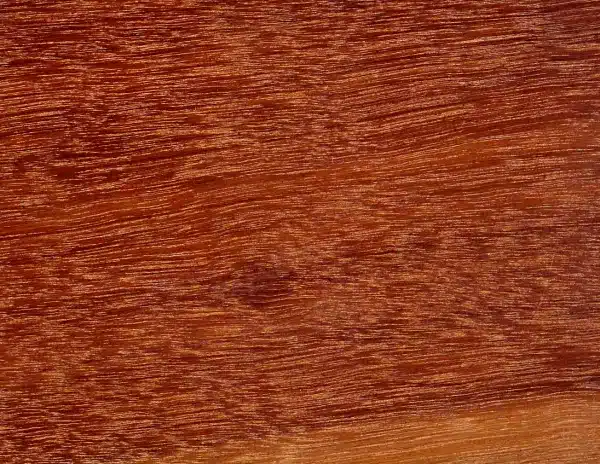
|
Origin |
northern to central South America |
|
bulk density |
0,9-1,11 g/cc |
|
durability class |
1 |
|
radial shrinkage |
0,33% |
|
Tangential shrinkage |
0,44% |
|
wood color |
dark reddish brown |
|
wood structure |
homogeneous with fine texture |
|
Usage |
Construction wood, decking wood |
Massaranduba is a very heavy and hard wood from South America. Its high strength makes it particularly durable outdoors and resistant to scratches and splinters. Planed smooth, the surface is very supple and suitable for barefoot use. Massaranduba has a dark reddish-brown color, which has earned it the name “Beefwood” in English or “Horse Meat Wood” in German. The wood is very homogeneous and has a fine texture.
Massaranduba - Hard and durable
The wood is so heavy that it doesn't float. With its high density, it achieves top values in terms of durability and fungal resistance. The smooth planed surface is particularly supple and very suitable for barefoot use.
However, a weakness of the type of wood is its only satisfactory stamina. To prevent warping, the wood should be technically dried. Shorter and narrower pieces of solid wood, like you at Wooden tiles or used with glued wood are not a problem. Longer and wider solid wood, on the other hand, often tends to moderate warping.
Massaranduba - Fruit and Latex
Massaranduba is mainly distributed in the Amazon region of Brazil and in Peru. A subspecies found in Guatemala, the Manilkara zapote, is used to make latex and the base material for chewing gum.
The Balata tree, from which the Massaranduba wood comes, reaches a height of 30 meters and a trunk diameter of 130 centimeters. The flesh of its berries is edible and has a sweet taste.
ab 6,10 €
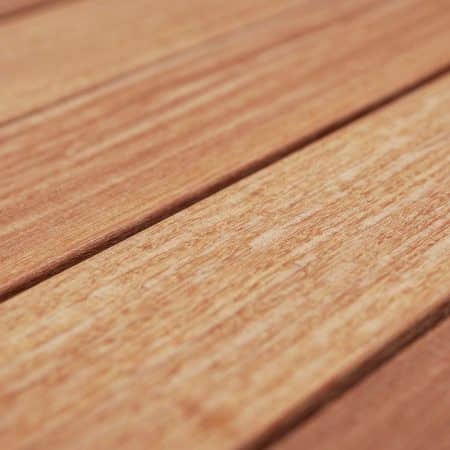
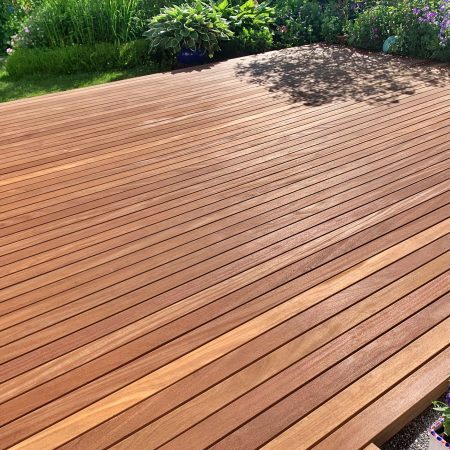
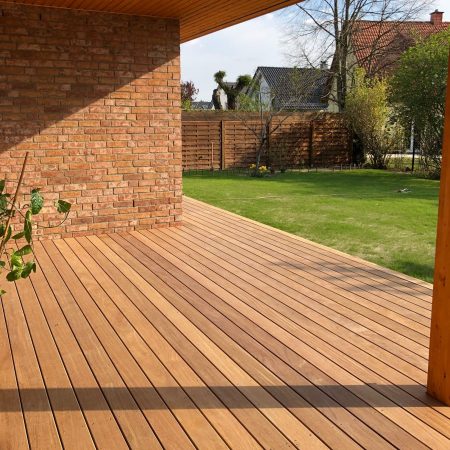
Cumaru decking, FSC 100%
Price from: €70 per m2, resistance class: 1
Advantages: ✓ best durability ✓ particularly robust and scratch-resistant
Disadvantages: ✗ partly rough surface ✗ high power development
Tip: Sand the floorboards after they have been exposed to the weather for the first time.
ab 8,75 €
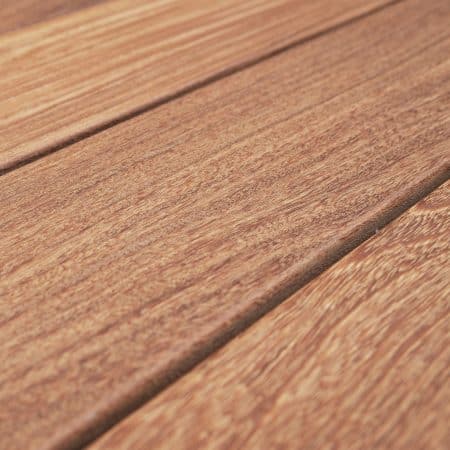
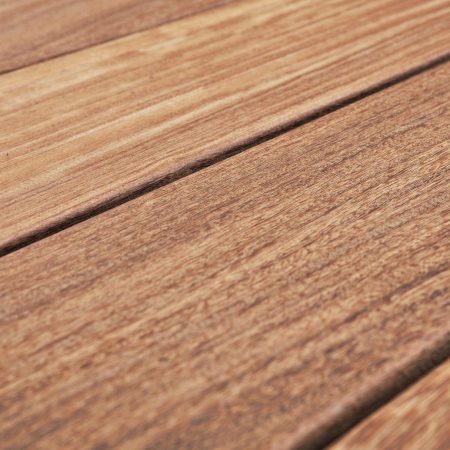
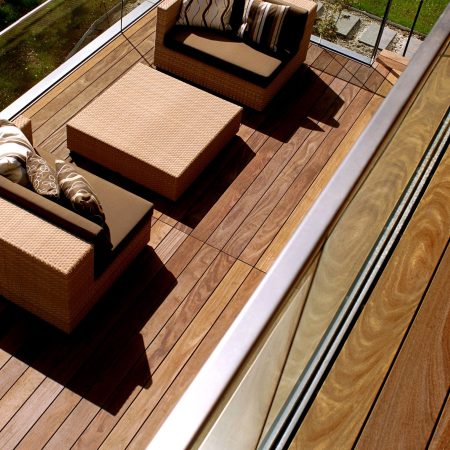
Cumaru decking, FSC 100%
Price from: €70 per m2, resistance class: 1
Advantages: ✓ best durability ✓ particularly robust and scratch-resistant
Disadvantages: ✗ partly rough surface ✗ high power development
Tip: Sand the floorboards after they have been exposed to the weather for the first time.
ab 11,50 €
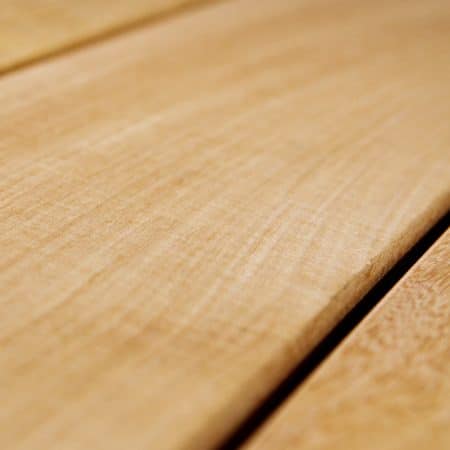
Cumaru decking, FSC 100%
Price from: €70 per m2, resistance class: 1
Advantages: ✓ best durability ✓ particularly robust and scratch-resistant
Disadvantages: ✗ partly rough surface ✗ high power development
Tip: Sand the floorboards after they have been exposed to the weather for the first time.
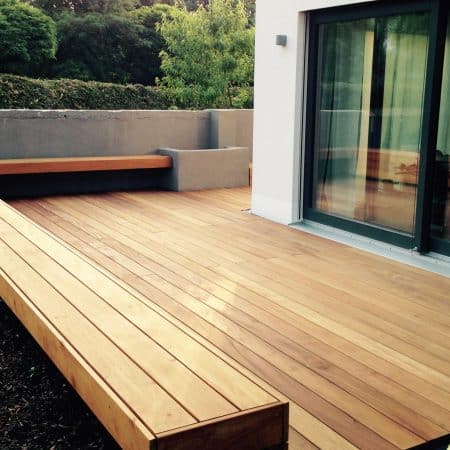
ab 9,10 €
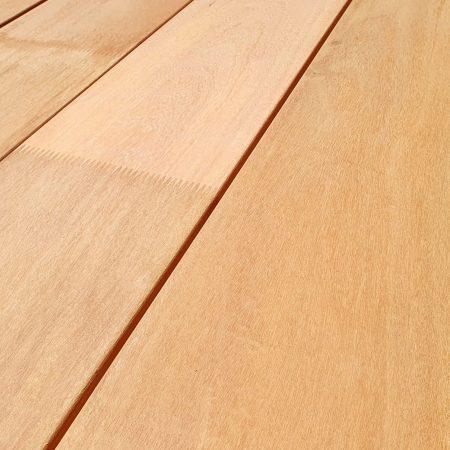
Garapa decking boards, FSC 100%
Price from: €65 per m2, resistance class: 1-2
Advantages: ✓ smooth surface ✓ homogeneous, light color
Disadvantages: ✗ Substances containing iron lead to discoloration ✗ Unscrewed tends to warp
Tip: Patio cleaning removes discoloration and
Professional interim storage avoids delay.
ab 9,80 €
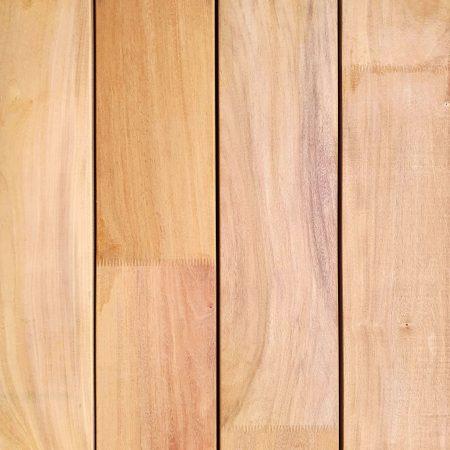
Garapa decking boards, FSC 100%
Price from: €65 per m2, resistance class: 1-2
Advantages: ✓ smooth surface ✓ homogeneous, light color
Disadvantages: ✗ Substances containing iron lead to discoloration ✗ Unscrewed tends to warp
Tip: Patio cleaning removes discoloration and
Professional interim storage avoids delay.
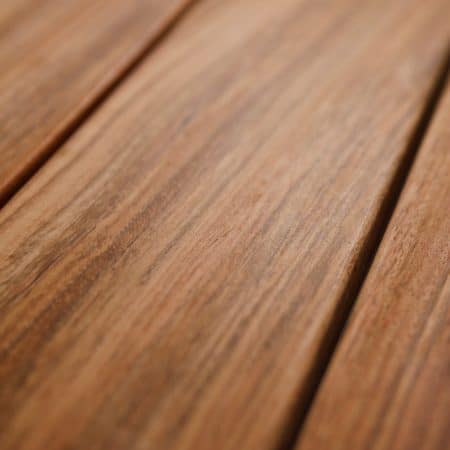
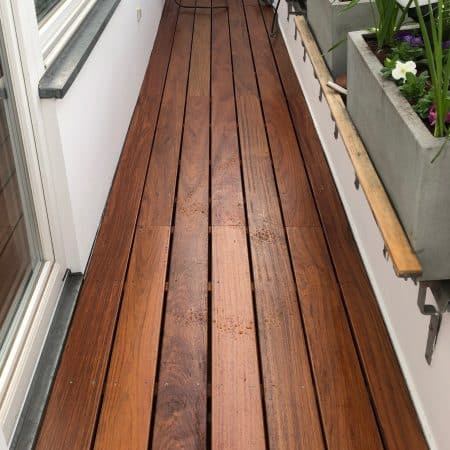
ab 9,10 €
Jatoba decking, FSC 100%
Price from: €65 per m2, resistance class: 1-2
Advantages: ✓ smooth surface ✓ strong color and grain
Disadvantages:✗ unoiled tendency to crack ✗ colored ingredients wash out
Tip: Clean and oil decking boards after installation.
ab 3,50 €
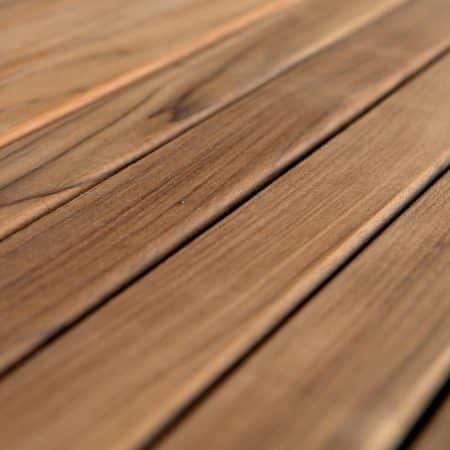
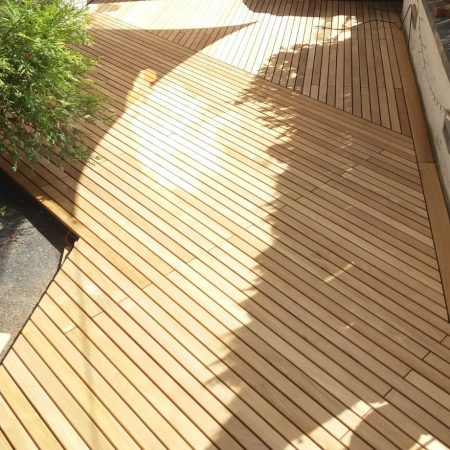
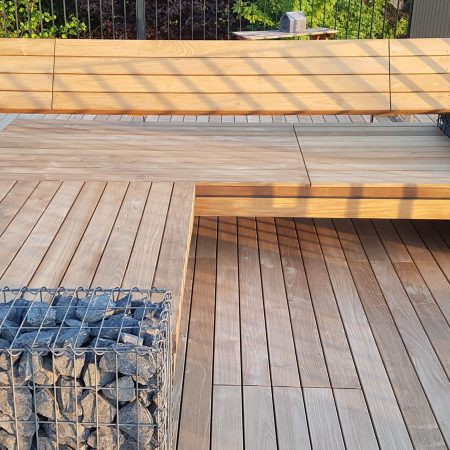
Teak decking, FSC 100%
Price from: €130 per m2, resistance class: 1
Advantages: ✓ Best durability and dimensional stability ✓ Lowest risk of cracks and splinters
Disadvantages: ✗ relatively expensive ✗ not very long boards
Tip: Lay decking boards together.
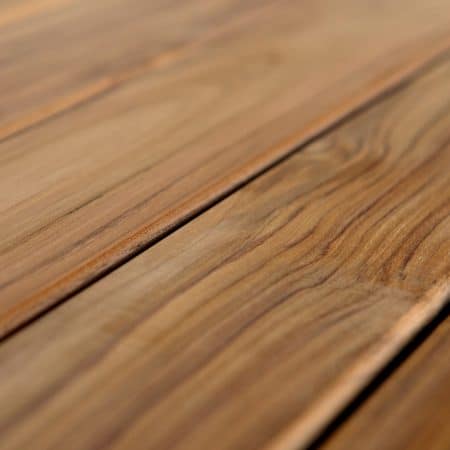
ab 6,50 €
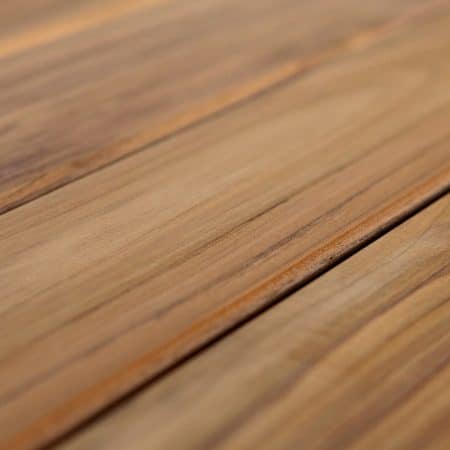
Teak decking, FSC 100%
Price from: €130 per m2, resistance class: 1
Advantages: ✓ Best durability and dimensional stability ✓ Lowest risk of cracks and splinters
Disadvantages: ✗ relatively expensive ✗ not very long boards
Tip: Lay decking boards together.
ab 6,80 €
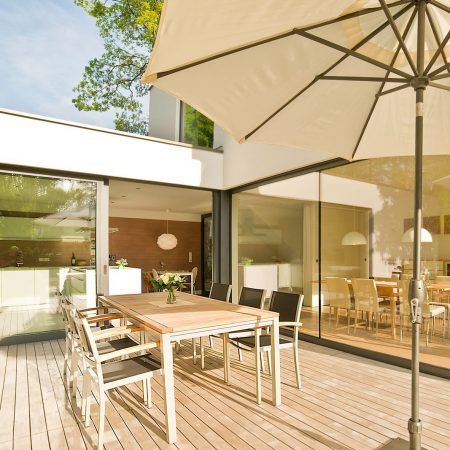
Teak decking, FSC 100%
Price from: €130 per m2, resistance class: 1
Advantages: ✓ Best durability and dimensional stability ✓ Lowest risk of cracks and splinters
Disadvantages: ✗ relatively expensive ✗ not very long boards
Tip: Lay decking boards together.