
Spruce
[Spruce]; [Picea abies]; Trade names European spruce, Nordic spruce, red spruce, red fir, Baltic whitewood, spruce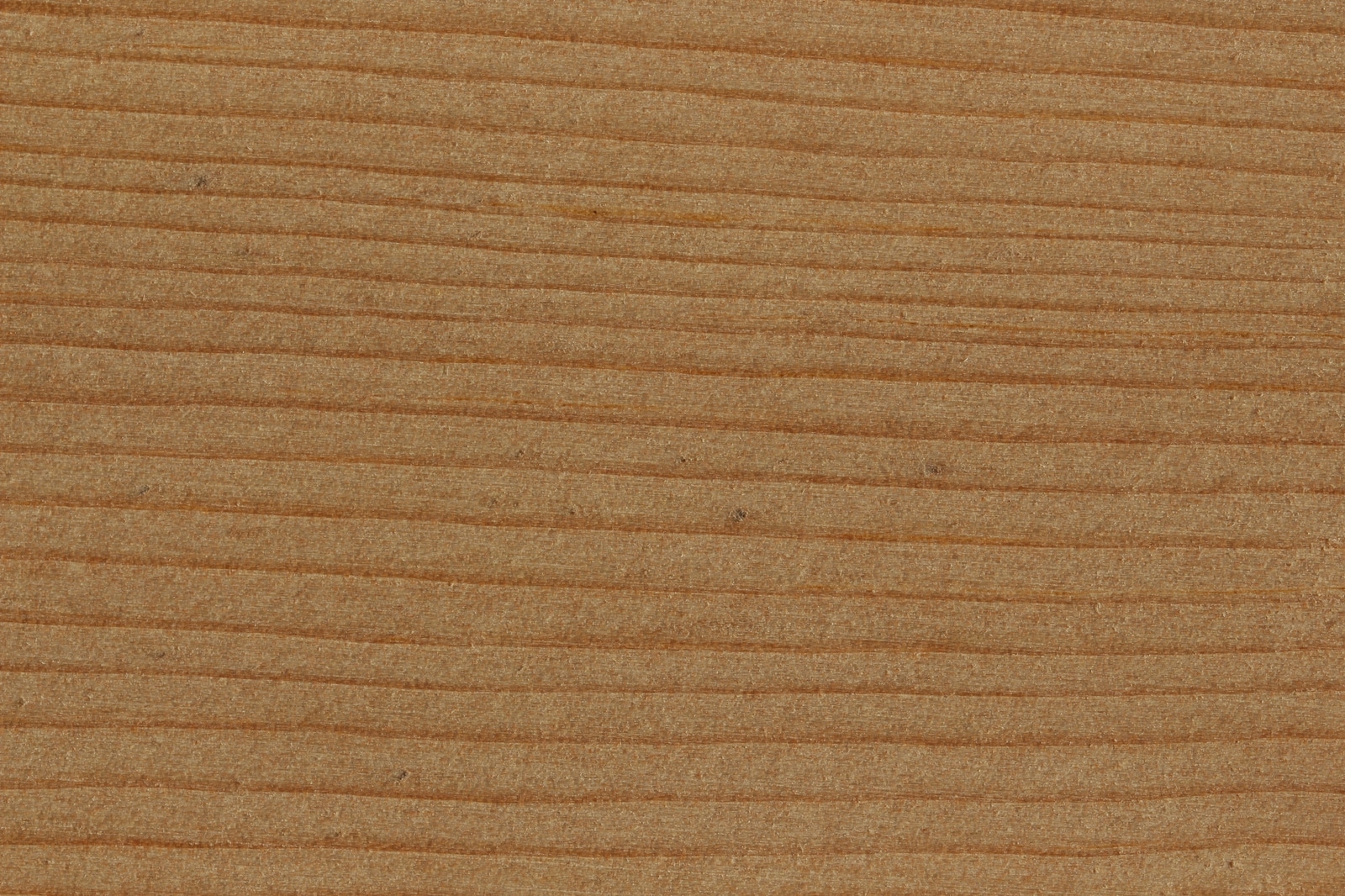
|
Origin |
Europe, Russia |
|
bulk density |
0,43 - 0,48 g/cc |
|
durability class |
4 (little permanent) |
|
radial shrinkage |
4,1% |
|
Tangential shrinkage |
8,7% |
|
wood color |
light pink to light yellow |
|
wood structure |
Annual rings clearly structured |
|
Usage |
Construction wood, cellulose, sauna wood, decking wood (impregnated) |
Spruce wood is one of the most important woods in the German wood trade and the most important German wood supplier. A third of the forest area in Germany is covered by spruce. As one of the cheapest European woods, it is used as pulp for paper production, as pallet wood or construction wood. Due to its low resistance (class 4), it can only be used as decking wood after impregnation
The German plantation tree
Every third tree in Germany is a spruce. Similar to plantain wood in the tropics, spruce is also usually planted in Europe under heavily cultivated conditions. A spruce forest usually stands in rank and file. Due to regular thinning, the forest floor is hardly covered by old growth. The trees grow relatively quickly for the temperate climate conditions.
Spruce wood is by far the most commonly used building and construction wood in civil engineering. However, it should not be used outdoors without protection, as it is not very durable.
Spruce decking boards
Despite its poor outdoor durability, spruce wood is also offered as a very cheap decking board. In order for the wood to last 5 to 8 years, it is pressure-treated. After that, it usually has a greenish color. In addition to its low resistance class, the strong resin formation of the wood and the tendency to splinter speak against outdoor use.
Sources: GD wood, Wikipedia, Cirad Tropix 7
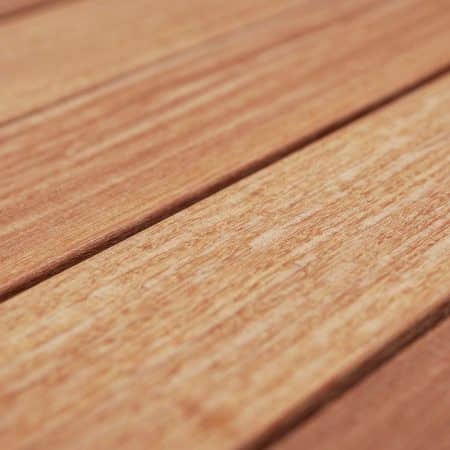
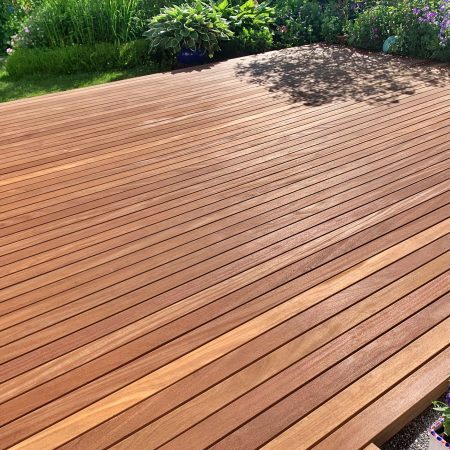
ab 6,10 €
Cumaru decking, FSC 100%
Price from: €70 per m2, resistance class: 1
Advantages: ✓ best durability ✓ particularly robust and scratch-resistant
Disadvantages: ✗ partly rough surface ✗ high power development
Tip: Sand the floorboards after they have been exposed to the weather for the first time.
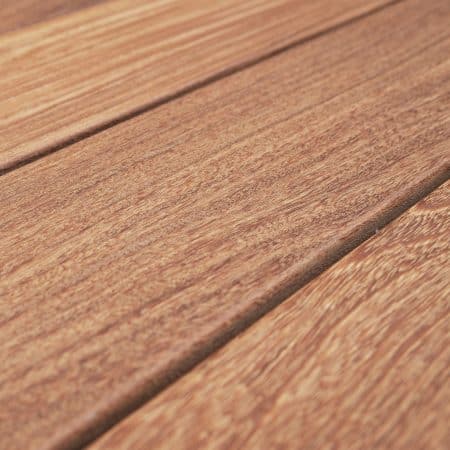
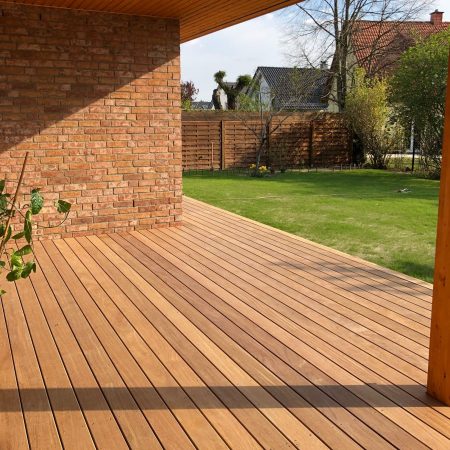
ab 8,75 €
Cumaru decking, FSC 100%
Price from: €70 per m2, resistance class: 1
Advantages: ✓ best durability ✓ particularly robust and scratch-resistant
Disadvantages: ✗ partly rough surface ✗ high power development
Tip: Sand the floorboards after they have been exposed to the weather for the first time.
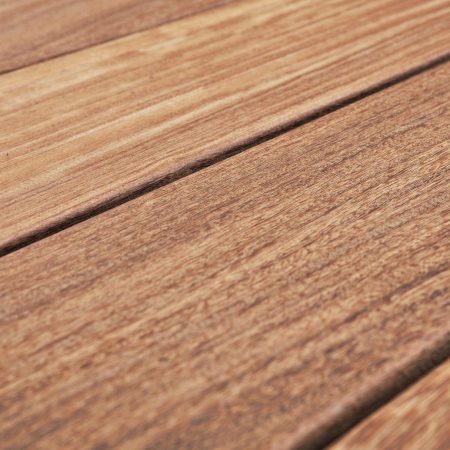
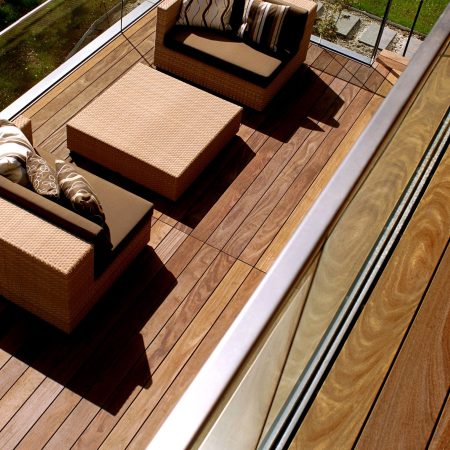
ab 11,50 €
Cumaru decking, FSC 100%
Price from: €70 per m2, resistance class: 1
Advantages: ✓ best durability ✓ particularly robust and scratch-resistant
Disadvantages: ✗ partly rough surface ✗ high power development
Tip: Sand the floorboards after they have been exposed to the weather for the first time.
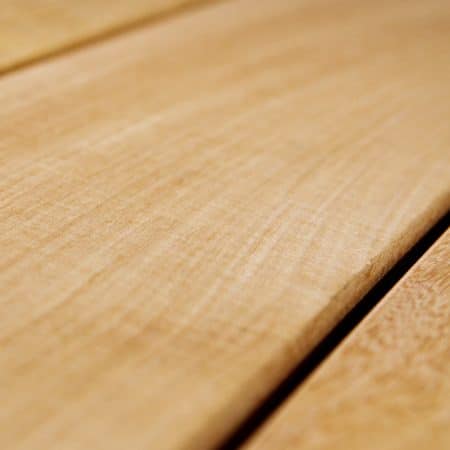
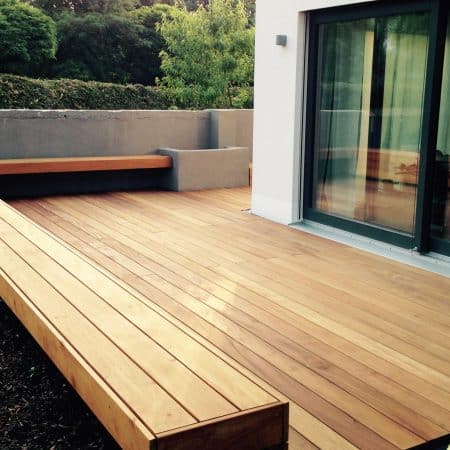
ab 9,10 €
Garapa decking boards, FSC 100%
Price from: €65 per m2, resistance class: 1-2
Advantages: ✓ smooth surface ✓ homogeneous, light color
Disadvantages: ✗ Substances containing iron lead to discoloration ✗ Unscrewed tends to warp
Tip: Patio cleaning removes discoloration and
Professional interim storage avoids delay.
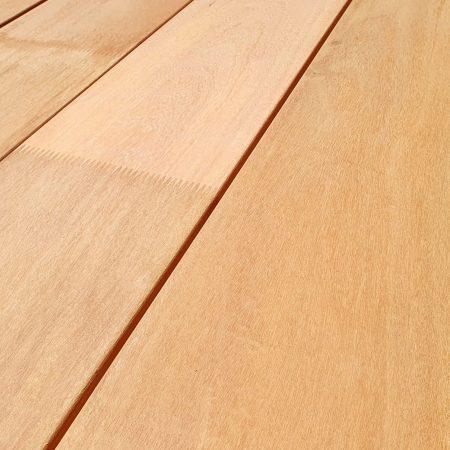
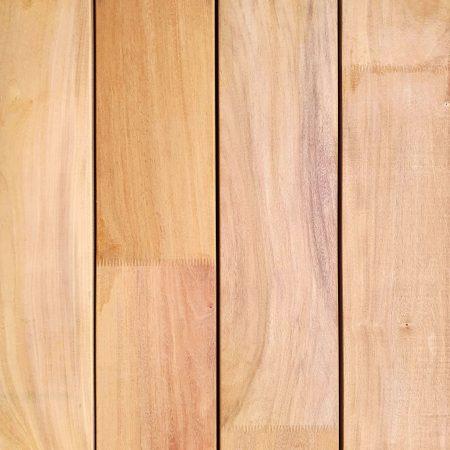
ab 9,80 €
Garapa decking boards, FSC 100%
Price from: €65 per m2, resistance class: 1-2
Advantages: ✓ smooth surface ✓ homogeneous, light color
Disadvantages: ✗ Substances containing iron lead to discoloration ✗ Unscrewed tends to warp
Tip: Patio cleaning removes discoloration and
Professional interim storage avoids delay.
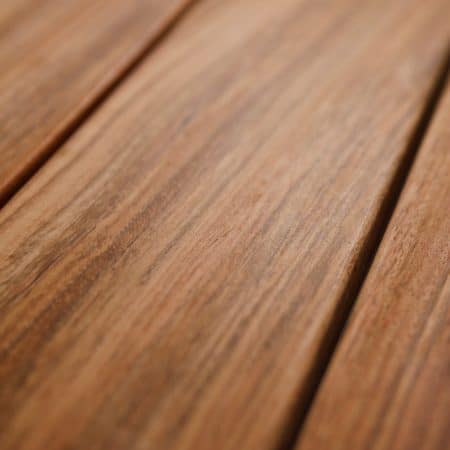
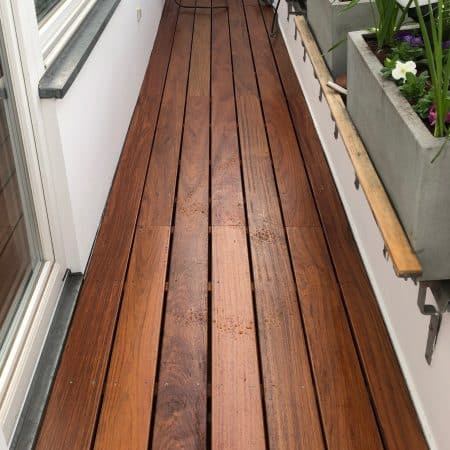
ab 9,10 €
Jatoba decking, FSC 100%
Price from: €65 per m2, resistance class: 1-2
Advantages: ✓ smooth surface ✓ strong color and grain
Disadvantages:✗ unoiled tendency to crack ✗ colored ingredients wash out
Tip: Clean and oil decking boards after installation.
ab 3,50 €
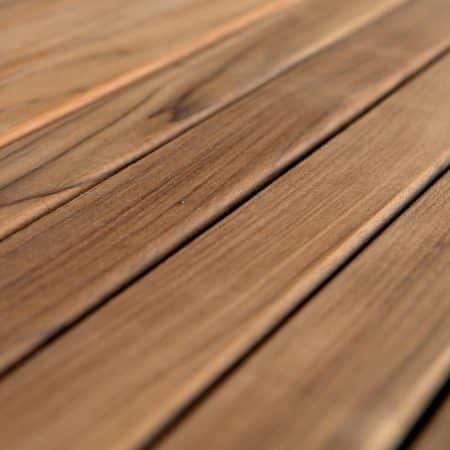
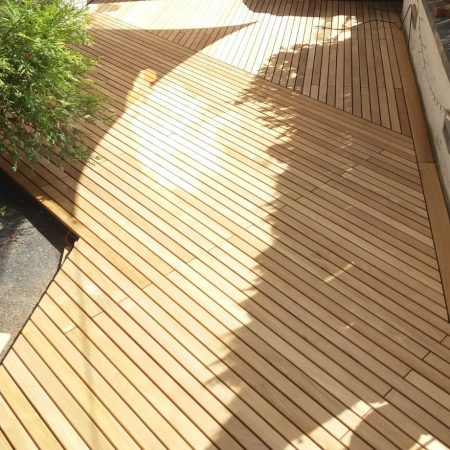
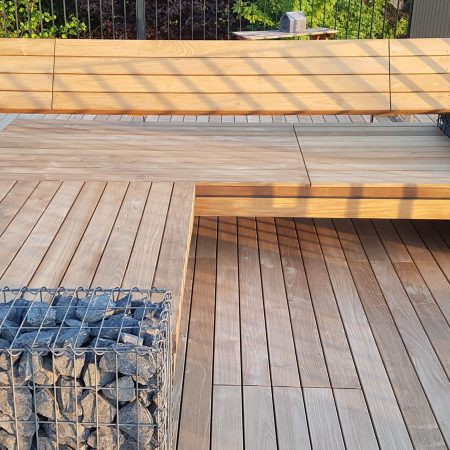
Teak decking, FSC 100%
Price from: €130 per m2, resistance class: 1
Advantages: ✓ Best durability and dimensional stability ✓ Lowest risk of cracks and splinters
Disadvantages: ✗ relatively expensive ✗ not very long boards
Tip: Lay decking boards together.
ab 6,50 €
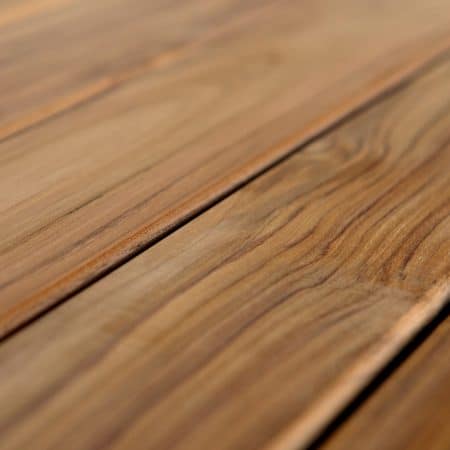
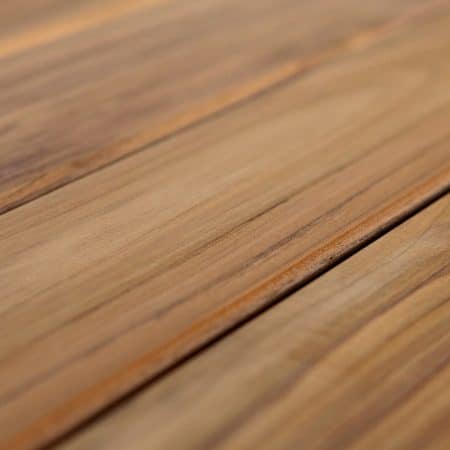
Teak decking, FSC 100%
Price from: €130 per m2, resistance class: 1
Advantages: ✓ Best durability and dimensional stability ✓ Lowest risk of cracks and splinters
Disadvantages: ✗ relatively expensive ✗ not very long boards
Tip: Lay decking boards together.
ab 6,80 €
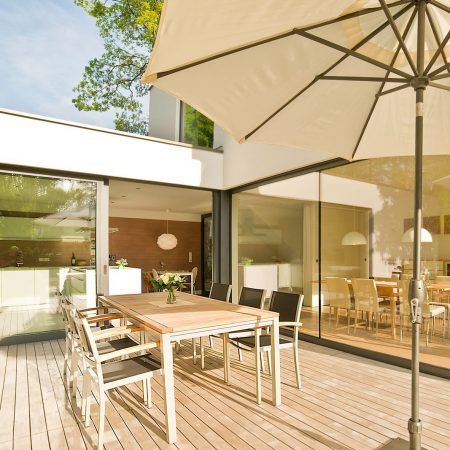
Teak decking, FSC 100%
Price from: €130 per m2, resistance class: 1
Advantages: ✓ Best durability and dimensional stability ✓ Lowest risk of cracks and splinters
Disadvantages: ✗ relatively expensive ✗ not very long boards
Tip: Lay decking boards together.