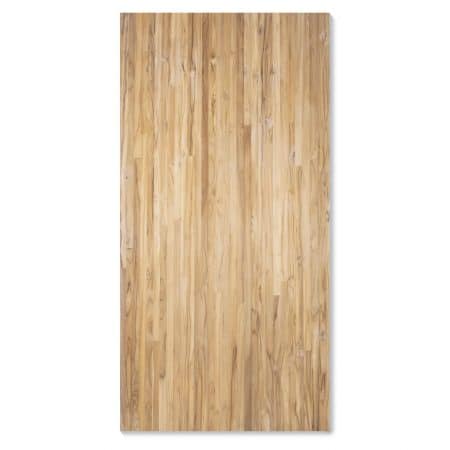
Zebrano
[Ze·bra·no]; [Microberlinia bisulcata]; Trade names: Allen élé (CMR), African zebrawood (GB)
| Origin | tropical, western Central Africa |
| bulk density | 0,69-0,77-0,85 g/cm³ |
| durability class | 2 – 3 |
| Compressive strength | 50-62-66 N/mm² |
| flexural strength | (84-)110-130 N/mm² |
| Differential shrinkage (radial) | 0,18-0,26% |
| Differential shrinkage (tangential) | 0,35-0,37% |
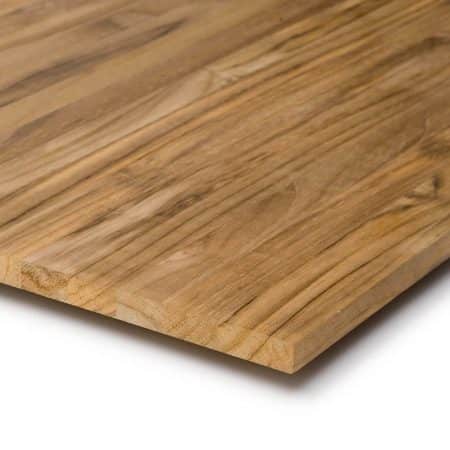
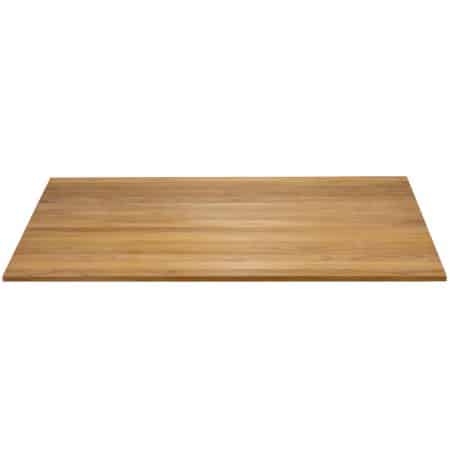
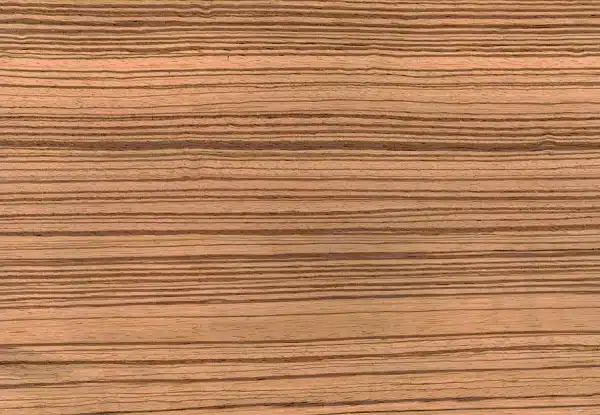
| wood color | light yellowish brown with dark brown stripes |
| wood structure | scattered porosity, coarse texture |
| Usage | Furnishing wood, construction wood for medium-duty use in interior and exterior construction |
The wood of Microberlinia brazzavillensis and Microberlinia bisulcata is traded under the common name Zebrano, although the differences in appearance and properties are small. Microberlinia brazzavillensis has a larger commercial volume because it is distributed in Gabon, the Central African Republic and the Congo. In contrast, Microberlinia bisulcata, restricted to Cameroon, has been on the IUCN endangered species list since 1998. Zebrano is characterized by a striking decorative color pattern, which gives this imported precious wood a special status. Microberlinia species are trees with heights of up to 40–45 meters and a trunk diameter of 75–150 centimeters. The paired pinnate leaves are leathery, the flowers are zygomorphic and white. The legumes contain black, flat seeds. Zebrano is valued for its unique look.
Zebrano, also known as Zebrawood, is known for its striking appearance with light yellowish-brown heartwood characterized by dark brown stripes reminiscent of zebra stripes. The broad sapwood is straw colored. With a coarse texture and a slightly to strongly alternating grain pattern, it has a uniform structure. Machining is moderate to heavy, requires carbide tools, and carbide is recommended for smooth surfaces. Zebrano is suitable for interior decoration, furniture, paneling, musical instruments and carvings. It has moderate resistance to fungi and termites.
Sources: Wikipedia, Wood from the specialist (GD Wood), Photo: Böhringer – Own work, CC BY-SA 2.5